Leaving Triple Whale? 7 profit and attribution tools for Shopify (2026)
Data as of October 2026. Prices and features come from each app's Shopify App Store listing, pricing page and help center, and from Shopify's Help Center, read October 30, 2026.
Summarize with AI
Your Triple Whale bill moved up a tier because your sales grew, and most days you open only the summary dashboard. If you mostly check which channel made each sale, the free Triple Whale alternative is already in your admin: Shopify's own Attribution page. For profit, Lifetimely is free up to 50 orders a month and TrueProfit starts at $35.
At a glance
What does each Triple Whale alternative cost at 500 orders a month?
Some tools price by orders and others by revenue or ad spend, so the fair test is one store size: 500 orders a month, as of October 2026.
| Tool | Best for | Free plan | At 500 orders a month | Priced by |
|---|---|---|---|---|
| Shopify Analytics | One dashboard and channel credit | Built into your admin | $0 extra | Your Shopify plan |
| Polar Analytics | The closest full swap | No | From $750 | Yearly online revenue |
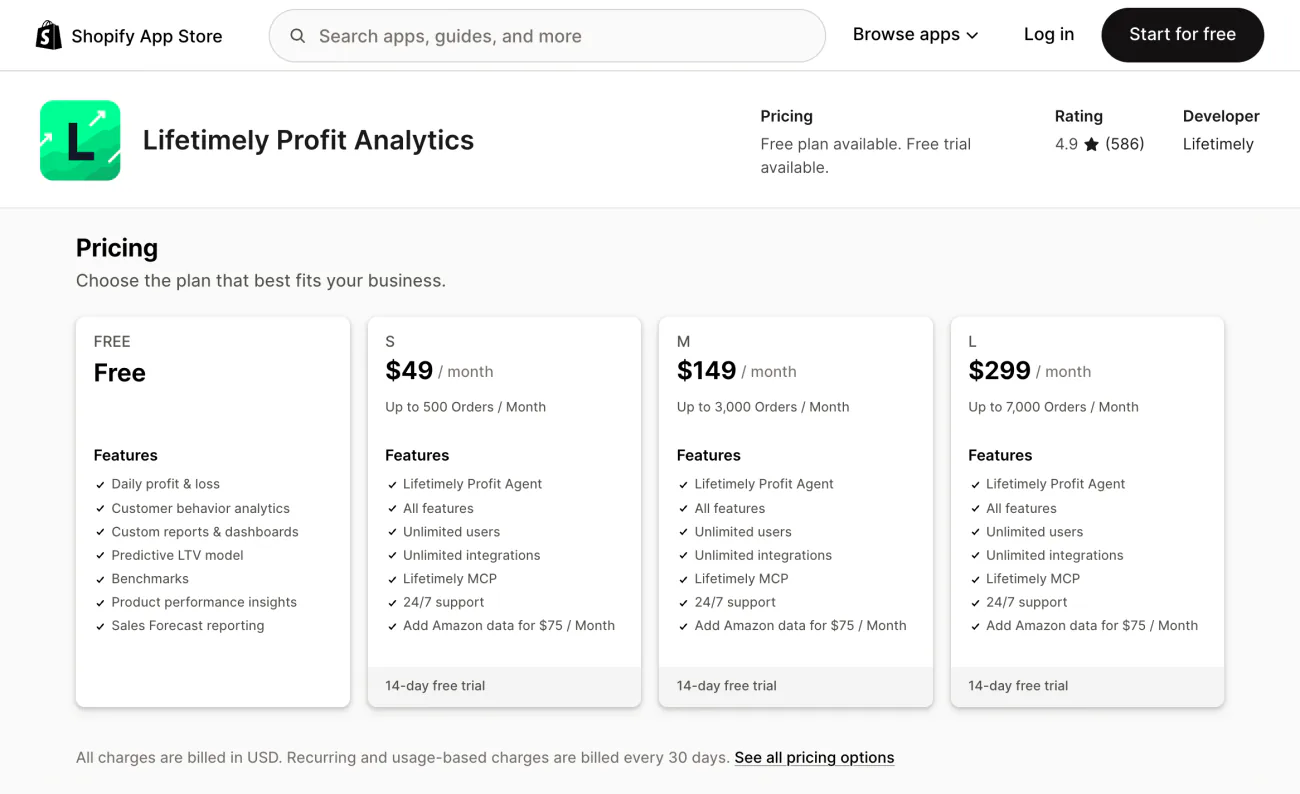
| Lifetimely | Profit and lifetime value | Up to 50 orders a month | $49 on S | Orders |
| TrueProfit | The lowest paid entry price | No, 14-day trial | $60 on Advanced | Orders, plus a fee per extra order |
| BeProfit | Several shops | No, 14-day trial | $99 on Pro | Orders, or $249 for no limit |
| Northbeam | Heavy ad spend | No, plans are quoted | From $1,500 | Pageviews and ad spend |
| Peel | Repeat buyers | No, 7-day trial | $199 on Core | Orders |
| Triple Whale | Where you are now | Yes, first- and last-click credit | $219 on Foundation, per its listing | Yearly revenue and plan, on a 12-month term |
At 3,000 orders a month, Peel goes from the most expensive order-priced app to the second cheapest: Lifetimely costs $149, Peel $199, TrueProfit $200 and BeProfit $249. Every app here installs from the Shopify App Store, and Shopify's own reports need nothing installed.
Triple Whale's price
How much does Triple Whale cost in 2026?
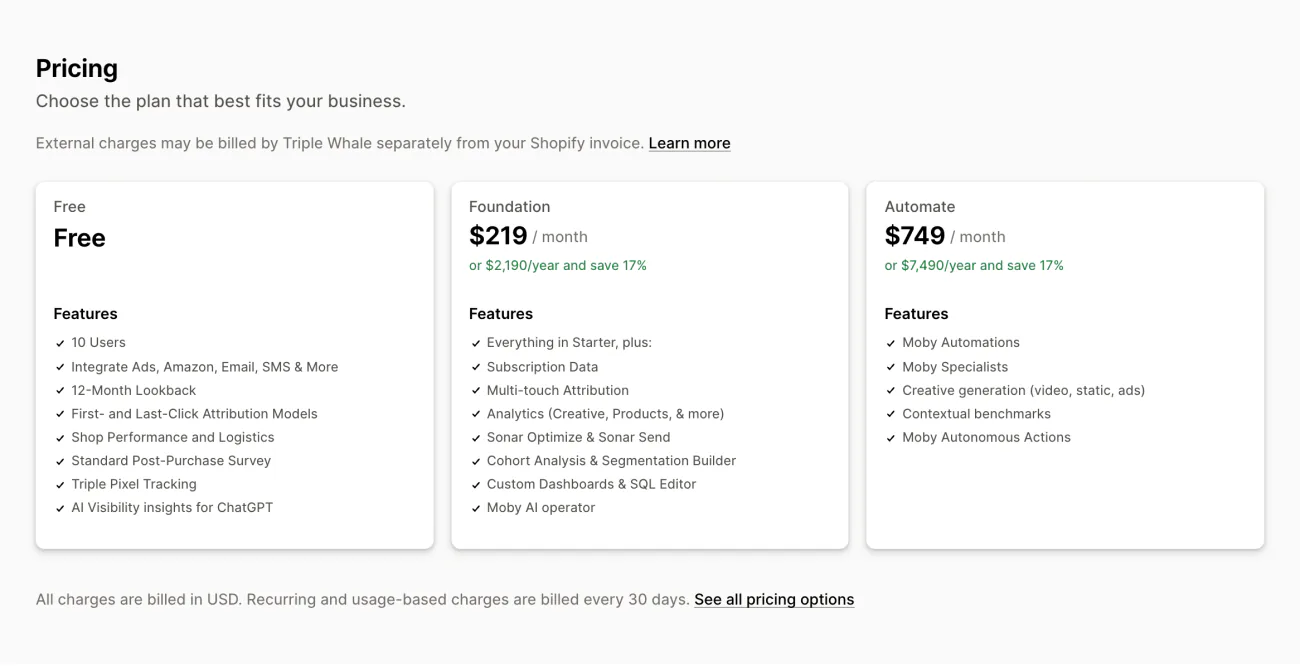
Triple Whale's own pricing page prints no prices. Its App Store listing does.
| Plan | Price a month | Billed yearly | What it includes |
|---|---|---|---|
| Free | $0 | $0 | 10 seats, 12 months of data, first- and last-click credit |
| Foundation | $219 | $2,190 | Multi-touch attribution, cohort analysis, custom dashboards, the Moby AI operator |
| Automate | $749 | $7,490 | Moby automations, creative generation, benchmarks |
Your price follows your store's yearly revenue and the package you pick, its pricing page says. When your revenue reaches the next tier, Triple Whale moves you up a plan automatically, with notice in advance. Paying for a year up front locks your tier for that year.
Foundation, Automate and Enterprise are 12-month subscriptions, even when you pay monthly. Triple Whale's help center points Enterprise at stores with at least $10 million a year in sales. Some charges may be billed outside your Shopify invoice.
Site search analytics and path and funnel reports sit in the Conversion add-on. Automate and Enterprise include it, and on Foundation it costs extra.
How we picked
How did we pick these seven Triple Whale alternatives?
Each of the seven is built mainly for ad credit, profit or repeat buyers, and each runs through a Shopify App Store app or your admin. We read every price on October 30, 2026, then ranked them by fit for leaving Triple Whale: the free check first, the closest full swap next, the profit apps by entry price, then heavy-spend attribution and repeat buyers. Triple Whale stays in the table above as your baseline.
Alternative 1 · Shopify Analytics
Triple Whale vs Shopify Analytics: is the free one enough?
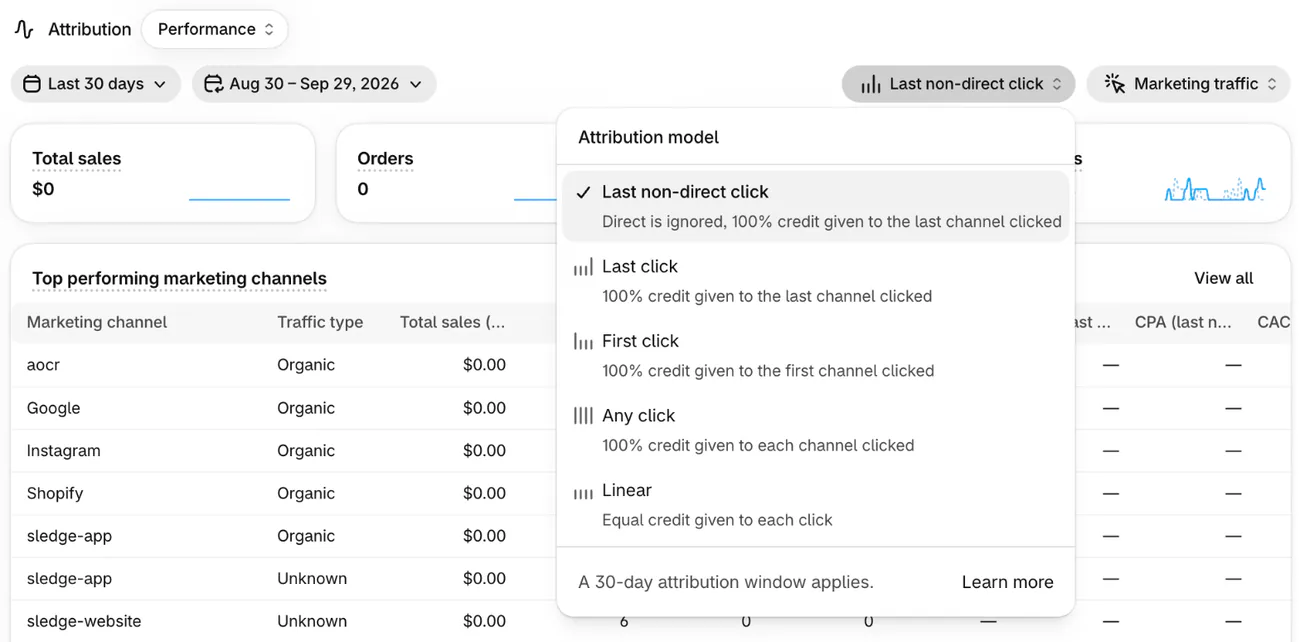
You check the summary, see which channel sold, and close the tab. Shopify already does that in your admin, at no extra cost, under Growth, then Attribution.
Shopify credits sales five ways: Last non-direct click (the default), Last click, First click, Any click and Linear. You switch models from the Attribution menu, or compare them side by side in the Performance by marketing channel report. A Path to purchase view counts the marketing touches in the 30 days before each order.
The same channel report also shows ad spend, return on ad spend, cost per acquisition and average order value for each channel. Spend appears only for channels that send cost data, such as a connected ad platform, and a dash means no data rather than zero.
For profit, fill in “Cost per item”, the box in each product's Price section. The profit reports then show gross profit and margin. The Customer cohort analysis report groups buyers by the date of their first order and shows who bought again.
The gaps: profit here is net sales minus the cost per item you record, so taking out ad spend is the profit apps' job. Shopify also credits sales by its own sessions, so its numbers can differ from Ads Manager.
Best for: you read one dashboard and want channel credit without a second bill.
Alternative 2 · Polar Analytics
Triple Whale vs Polar Analytics: which is closer to a full swap?
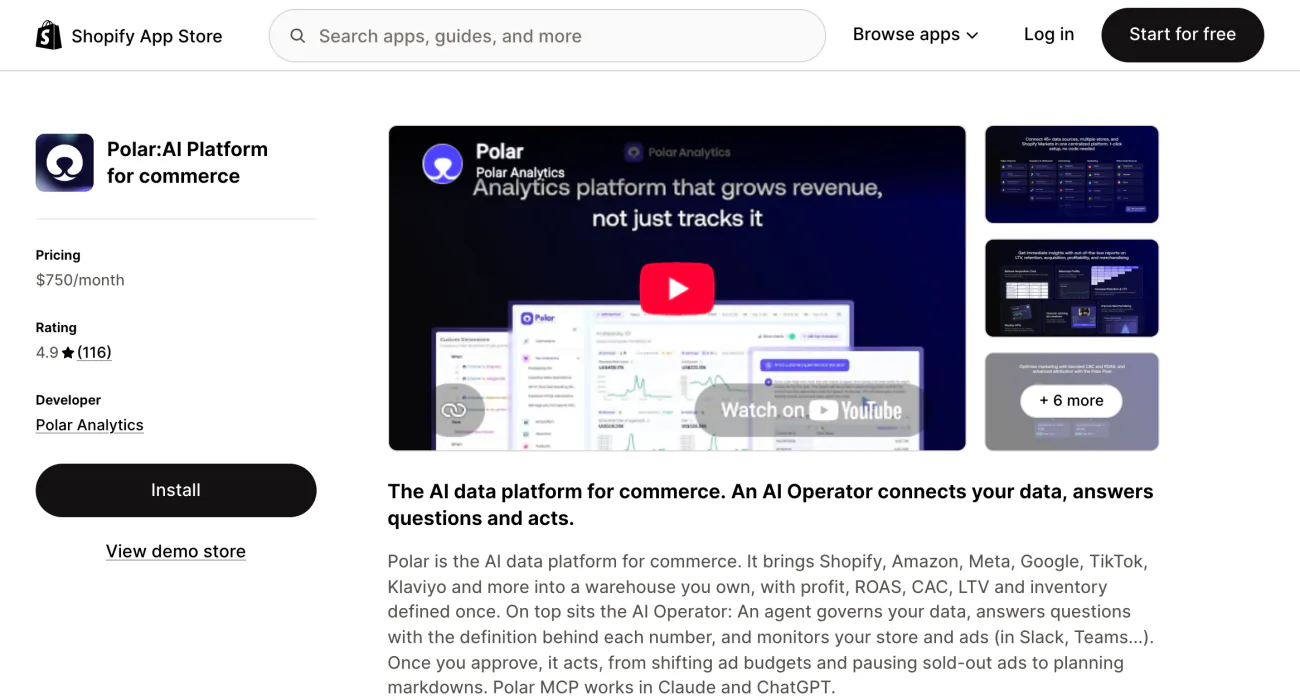
You want what Triple Whale does, with numbers you can trace back. Polar Analytics comes closest on this list.
Its app pulls your Shopify, Amazon, Meta, Google, TikTok, Klaviyo and other data into one database you own. You get profit, contribution margin, lifetime value, cohorts, return on ad spend and blended customer acquisition cost. Polar's AI Operator works in Slack, and it shifts ad budgets or pauses ads only once you approve.
The App Store listing has one plan, Core, from $750 a month, priced by online revenue, with discounts for annual terms. Seats, history and connections are unlimited. On Polar's own pricing page, every plan card's button reads “Book a demo”.
The gaps: Polar is priced by revenue too, the model you may be leaving. Charges may be billed outside your Shopify invoice.
Best for: replacing Triple Whale with one tool that does the same jobs.
Alternative 3 · Lifetimely
Triple Whale vs Lifetimely: do you need attribution or profit?
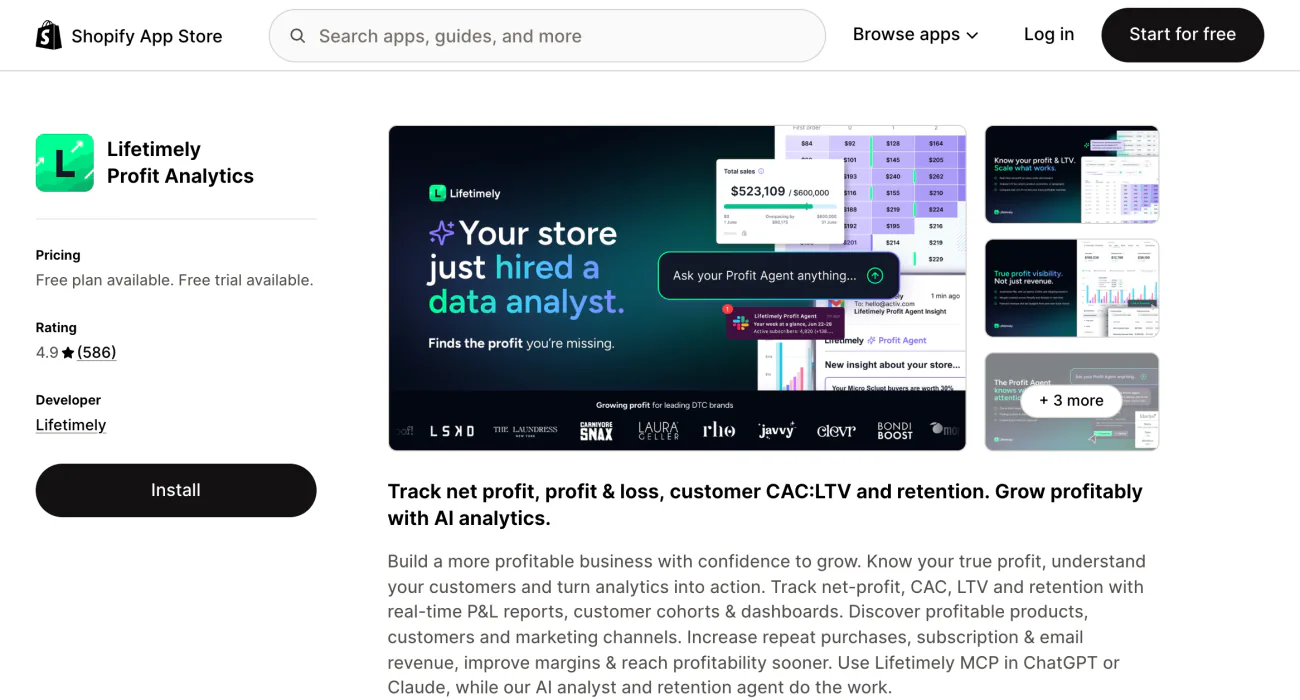
You want to know whether you made money after ads, and when a new customer turns profitable. Lifetimely Profit Analytics, made by AMP, builds a daily profit and loss report from your product costs, other costs, ad spend and discounts.
It shows how long each customer takes to pay back what you spent to win them, with cohort and subscription reports. It connects to Google Ads, Meta Ads, TikTok, Klaviyo, Recharge and QuickBooks Online.
The free plan is for stores up to 50 orders a month, AMP's site says, and includes the daily profit and loss report and predictive lifetime value. On the listing, S costs $49 a month for up to 500 orders, M $149 for 3,000 and L $299 for 7,000, each with a 14-day trial. Amazon data adds $75 a month.
The gaps: the listing tags marketing attribution but names no attribution model, so if multi-touch credit is the report you open daily, test it during the trial. Lifetimely's Profit Agent is not on the free plan.
Best for: profit and lifetime value, at a price that follows orders, not revenue.
Alternative 4 · TrueProfit
Triple Whale vs TrueProfit: what does net profit cost from $35?
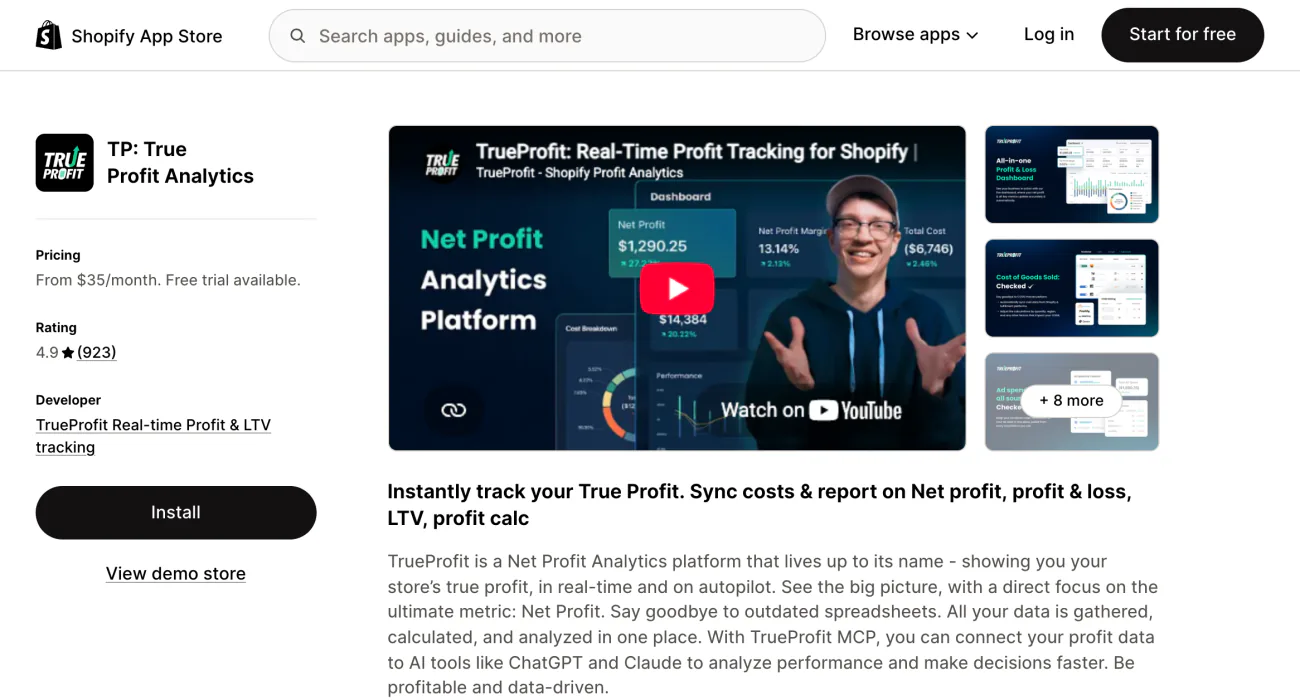
Your profit spreadsheet never feels right once fees, ad spend and shipping are all in it. TP: True Profit Analytics tracks product costs, shipping, transaction fees, taxes and any custom cost you add.
It pulls ad spend from Facebook, Google, TikTok, Bing, Snapchat and Amazon, then shows net profit by product and by ad. You also get lifetime value, a profit and loss view, one view across all your stores and a mobile app.
Basic costs $35 a month for 300 orders, then $0.30 for each extra order, capped at $300. Advanced is $60 for 600 orders, Ultimate $100 for 1,500 and Enterprise $200 for 3,500. There is no free plan, and each plan has a 14-day trial.
The gaps: past each plan's allowance you pay per order. Product analytics and the profit and loss report start on the $60 Advanced plan, and marketing attribution comes only on the $200 Enterprise plan.
Best for: net profit at the lowest paid price, $35 against Lifetimely's $49, though Lifetimely costs nothing up to 50 orders a month.
Alternative 5 · BeProfit
TrueProfit vs BeProfit: which costs less at your order count?
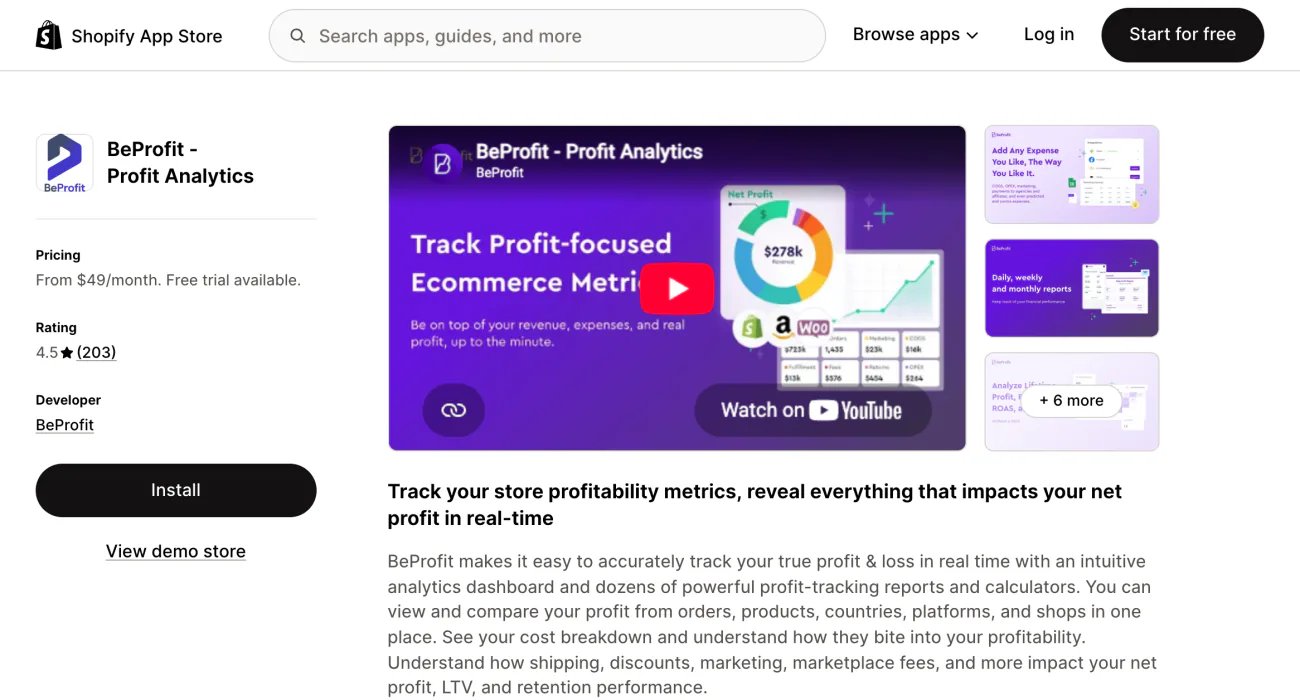
You run more than one shop and want one profit and loss view. BeProfit shows profit by order, product, country, platform and shop, and connects to Amazon, Facebook Ads, Google Ads, Google Analytics, Klaviyo and TikTok.
Basic costs $49 a month for 450 orders, Pro $99 for 900 and Ultimate $149 for 1,700. The Plus plan, at $249, sets no limit on orders, shops or team members. Yearly billing saves 20%, and every plan has a 14-day trial.
At 500 orders a month, TrueProfit costs $60 and BeProfit $99. TrueProfit's Basic would cost $95 there, once 200 extra orders at $0.30 are added, so its next plan up is cheaper. At 3,000 orders, TrueProfit costs $200 on Enterprise and BeProfit $249 on Plus.
The gaps: the profit and loss report starts on Pro. Attribution by campaign tags and lifetime value cohorts start on the $149 Ultimate plan.
Best for: several shops, or a high order count, on one flat profit price.
Alternative 6 · Northbeam
Triple Whale vs Northbeam: when is a $1,500 starting price worth it?
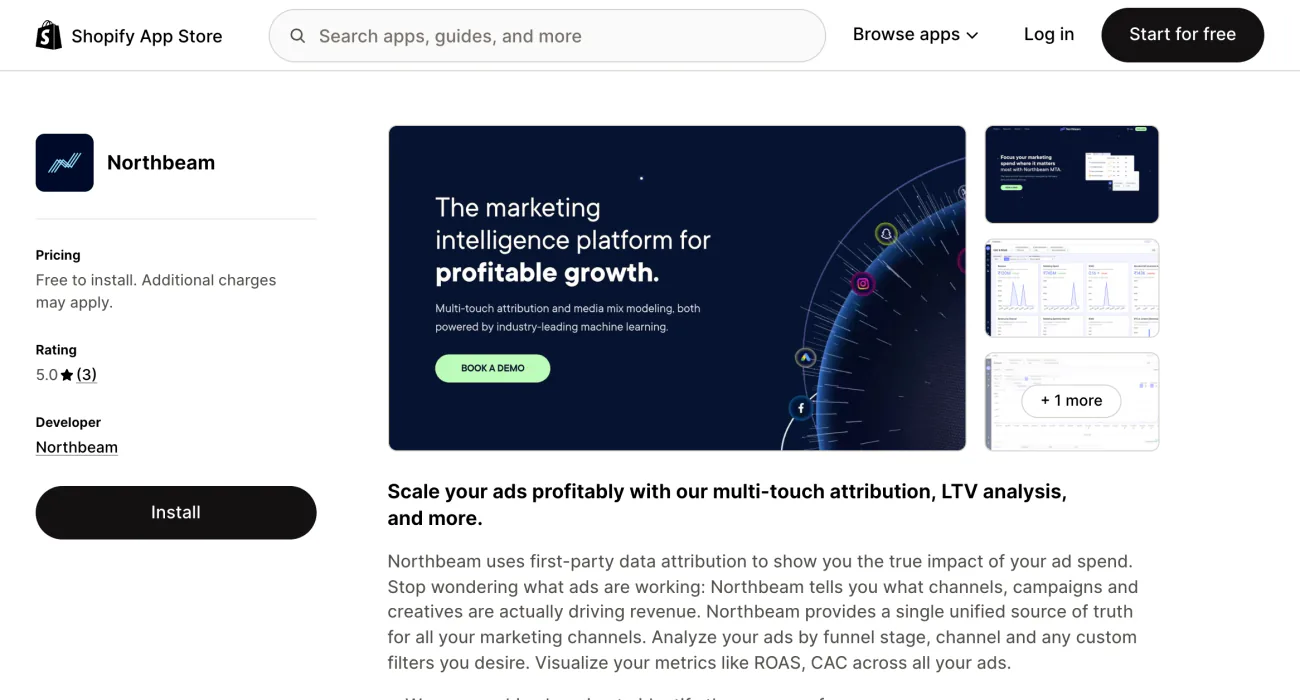
You spend heavily on ads and trust no platform's own numbers. Northbeam runs its own multi-touch attribution, and from its Starter plan up it credits view-through conversions: sales after an ad the shopper saw but never clicked.
Its numbers may not match Meta Ads Manager, which Northbeam says is the point. The App Store app is free to install, with plans quoted by site pageviews and how often your data refreshes.
On Northbeam's site, Starter runs from $1,500, month to month, if you spend under $1.5 million a year on ads. Professional starts at $3,500 a month for up to $500,000 a month in ad spend. The monthly price then follows your pageviews, Northbeam says.
The gaps: the price, an annual term on Professional and Enterprise, and only 3 reviews on its listing.
Best for: heavy ad spend, when attribution is the one report you need.
Alternative 7 · Peel
Triple Whale vs Peel: what if repeat buyers matter more than ad credit?
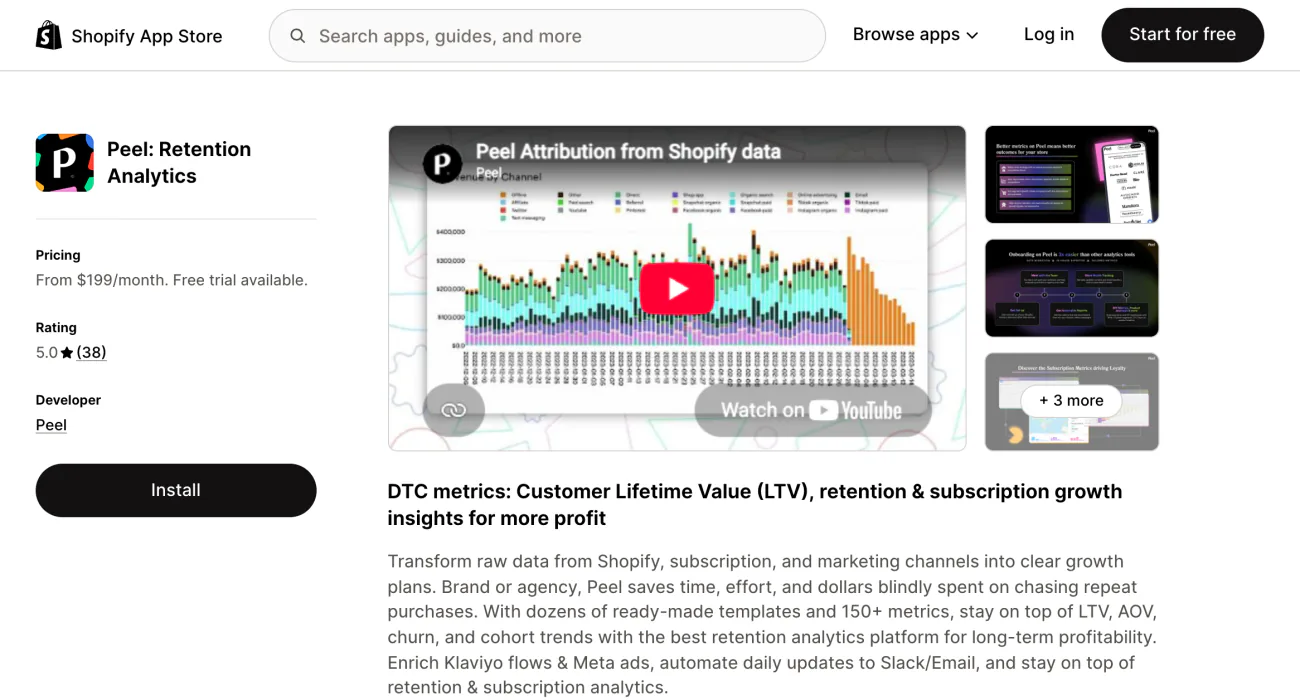
You care about who comes back more than which ad won the first sale. Peel: Retention Analytics reports on lifetime value, retention, repeat purchases, churn and subscriptions, across 150+ metrics.
It groups buyers by how recently, how often and how much they spend, and sends those audiences to Klaviyo and Meta. It also offers 1:1 strategy calls.
Core costs $199 a month for up to 6,000 orders, or $179 a month at the annual rate on Peel's site. Essentials is $499 for 16,000 orders, and Accelerate $899 for 29,000 with a dedicated account manager. The 7-day trial starts once your data is loaded, and Peel says every feature is on every plan.
The gaps: nothing under $179 a month, and the listing tags marketing attribution without naming any attribution model.
Best for: you sell subscriptions or live on repeat orders.
Also considered
What about Glew?
Glew turns up on other lists of Triple Whale alternatives. Its Shopify App Store page reads “This app is not currently available on the Shopify App Store.” On Glew's own site, Glew Pro costs $250 a month and requires annual prepayment.
Why the numbers differ
Why do Triple Whale, Shopify and Meta never agree?
Ads Manager claims more sales than Shopify ever recorded, and your analytics app shows a third number. You no longer know which one to plan from.
Each platform credits a sale by its own rules, so two of them can count the same order. Shopify defaults to Last non-direct click, and ad spend can take up to 24 hours to reach it. Shopify, your ad account and your analytics app can each show a different conversion rate for the same day.
Plan from one number and keep the others as checks. Before you trust any tool's totals, see whether its revenue includes tax, and whether it pulls your real shipping costs or asks you to guess an average.
Not ranked · Sledge
Want to know what shoppers did after the click?
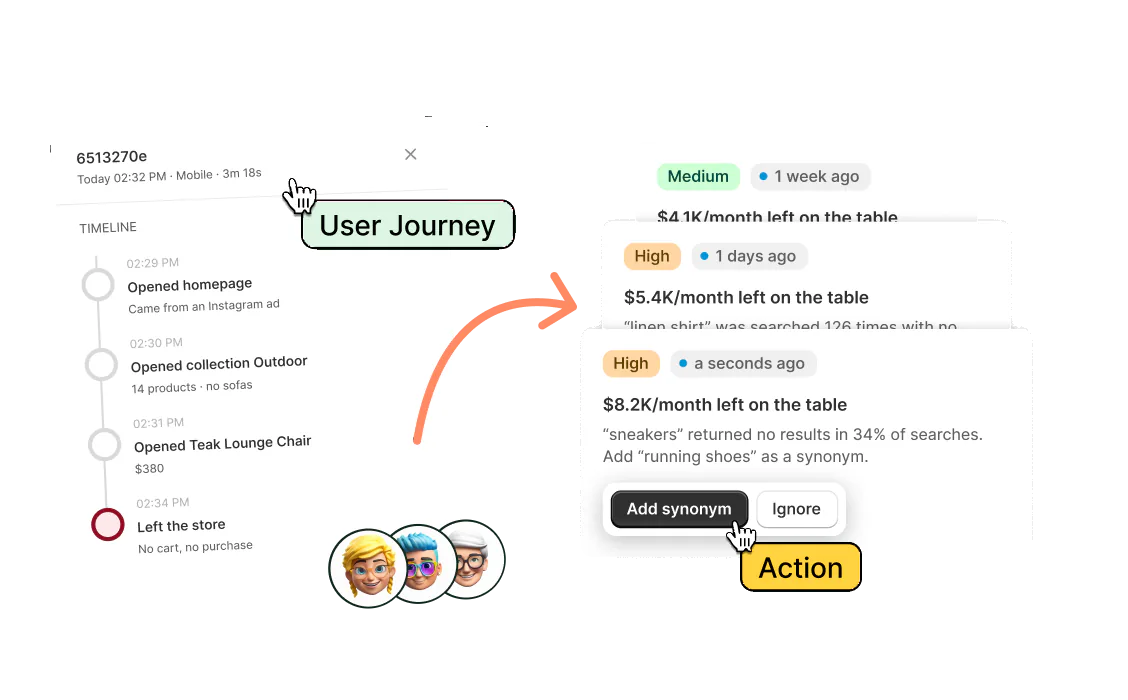
The seven options above tell you which ad or channel brought the shopper in, or what the sale earned after costs. Sledge Analytics shows what happened next, inside your store: the sales each Sledge tool brought in, such as product recommendations or merchandising, and the pages where visits end.
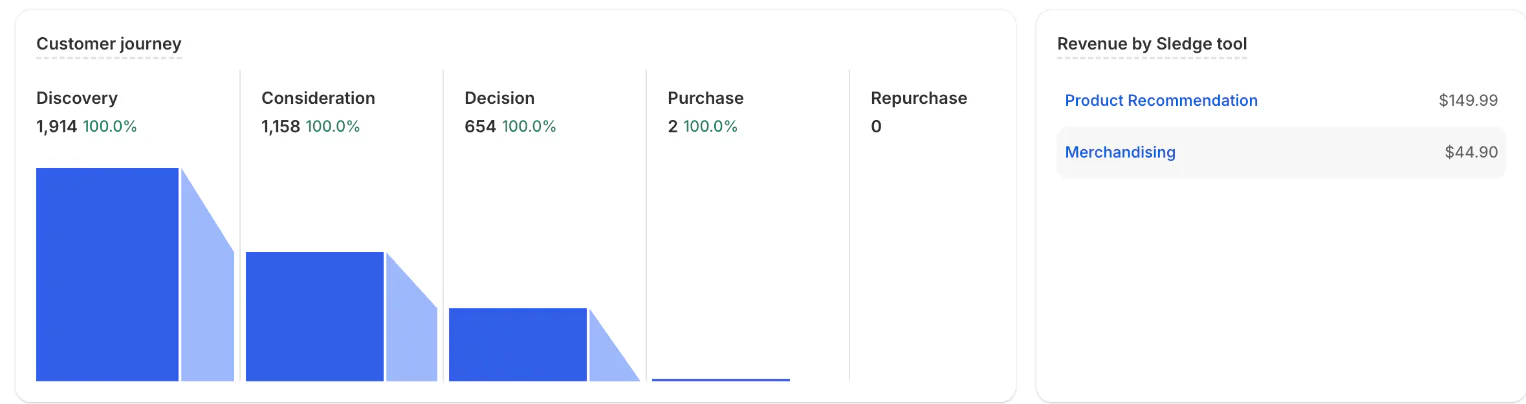
Sledge does no ad attribution and no profit math, so it works beside one of the seven rather than in place of one. Leaving Triple Whale's Automate plan also takes away its site search and funnel reports, and that is the part Sledge Analytics comes closest to.
Switching
How do you leave Triple Whale without paying twice?
Monthly billing can still be a 12-month subscription, so a trial started too early ends with you paying for two tools.
- Check your term. Ask Triple Whale when your 12 months end, and plan the switch around that date.
- Export what you need. Some apps keep nothing once you uninstall, Shopify's help warns.
- Run the new tool beside Triple Whale. Use its free plan or trial, and compare the same week in both.
- Ask about refunds, then uninstall. In your Shopify admin, open Settings, then Apps, and uninstall Triple Whale. That cancels future charges billed through Shopify, though the current billing cycle may still be billed.
- Cancel what Shopify does not bill. Uninstalling does not cancel charges Triple Whale bills outside your Shopify invoice, so cancel those with Triple Whale directly.
Which alternative fits you
Which Triple Whale alternative fits your store?
- You read one dashboard and want channel credit. Shopify Analytics, at no extra cost in your admin.
- You want a like-for-like swap. Polar Analytics, from $750 a month.
- You want profit and lifetime value. Lifetimely, free up to 50 orders a month.
- You want net profit for the lowest paid price. TrueProfit, from $35 a month for 300 orders.
- You run several shops. BeProfit, $249 a month with no limit on orders or shops.
- You spend heavily on ads. Northbeam, from $1,500 on Starter.
- Your repeat buyers matter most. Peel, $199 a month for up to 6,000 orders.
- You can see the numbers, but not what to change. Here is what to do with what your analytics shows.
FAQ
Questions, answered
-

14-day free trial
Explore Sledge on your store before you decide to commit.
-

No credit card required
Start improving your store with no upfront commitment.
-

Setup in minutes
Get Sledge running without a lengthy setup process.
-

Built to grow sales
Turn shopper behavior into actions that help you sell more.
What is the best alternative to Triple Whale?
It depends on the number you open Triple Whale for. For ad credit, Shopify's own Attribution page is free and switches between five ways to credit a sale. For profit, Lifetimely is free up to 50 orders a month and TrueProfit starts at $35. Polar Analytics is the closest full swap, priced by your yearly revenue from $750 a month.
How much does Triple Whale cost?
Triple Whale has a free plan. On its Shopify App Store listing, Foundation costs $219 a month and Automate $749, and the price rises with your store's yearly revenue. Paid plans are 12-month subscriptions, billed monthly or yearly with two months free, and some charges may be billed outside your Shopify invoice.
What is Polar Analytics?
Polar Analytics is a Shopify analytics platform that brings your Shopify, Amazon, Meta, Google, TikTok and Klaviyo data into one database you own. It tracks profit, lifetime value and return on ad spend. An AI agent in Slack can shift ad budgets once you approve. Its Core Plan starts at $750 a month, priced by online revenue.
What is Lifetimely?
Lifetimely is a profit and lifetime value app for Shopify, made by AMP. It builds a daily profit and loss report from your product costs, ad spend and discounts, and shows when customers turn profitable. It is free up to 50 orders a month, and its listing's paid plans run from $49 for 500 orders to $299 for 7,000.
Is there a free alternative to Triple Whale?
Yes. Shopify's own reports cost nothing extra: the Attribution page credits sales to your channels five ways, and the profit reports show gross profit once you enter a cost per item. Lifetimely's free plan covers up to 50 orders a month with a daily profit and loss report. Triple Whale also keeps a free plan with first- and last-click credit.
See what shoppers do after the click, and what the fixes are worth
Your ad tool shows where a shopper came from. Sledge Analytics shows the sales each Sledge tool brought in and the pages where visits end. On a paid plan, Growth Intelligence reads your orders, searches and visits, then adds up what its suggested fixes could earn into one dollar figure, labeled “Est. potential”.