What is average order value?
Average order value, or AOV, is total revenue divided by the number of orders over a period. If a store takes $12,000 from 240 orders in a month, AOV is $50. It is the metric bundles, upsells, and free-gift goals move: same traffic, bigger baskets.
How do you calculate average order value?
The formula is revenue divided by orders. A store that did $12,000 from 240 orders last month has a $50 AOV. Add a frequently-bought-together set that one shopper in six accepts, at $36 a set. That is 40 sets and $1,440 more from the same 240 orders. AOV moves from $50 to $56.
The lift needs no new traffic. Those visitors were already paid for; the offer made each visit worth more. When those visits came from ads, the bigger basket also lifts your return on ad spend. A bigger basket also raises customer lifetime value, which is AOV times orders a year times years of buying.
On Shopify stores
Shopify reports average order value in your store analytics: total sales divided by total orders. Stores raise it with offers that make the bigger basket the natural choice: quantity breaks on the product page, a free-gift goal in the cart, a one-time offer on the thank-you page, or letting shoppers pay over time. Afterpay and Klarna offer pay later too, and Afterpay vs Klarna on Shopify covers where each can run. Raising AOV is cheaper than buying more visitors, because the shopper is already in the store. In the US, a bigger order also spreads the fixed 30¢ of each online card fee on Shopify Payments over more dollars, as the sums in Etsy vs Shopify fees on a $40 sale show.
Average order value with Sledge
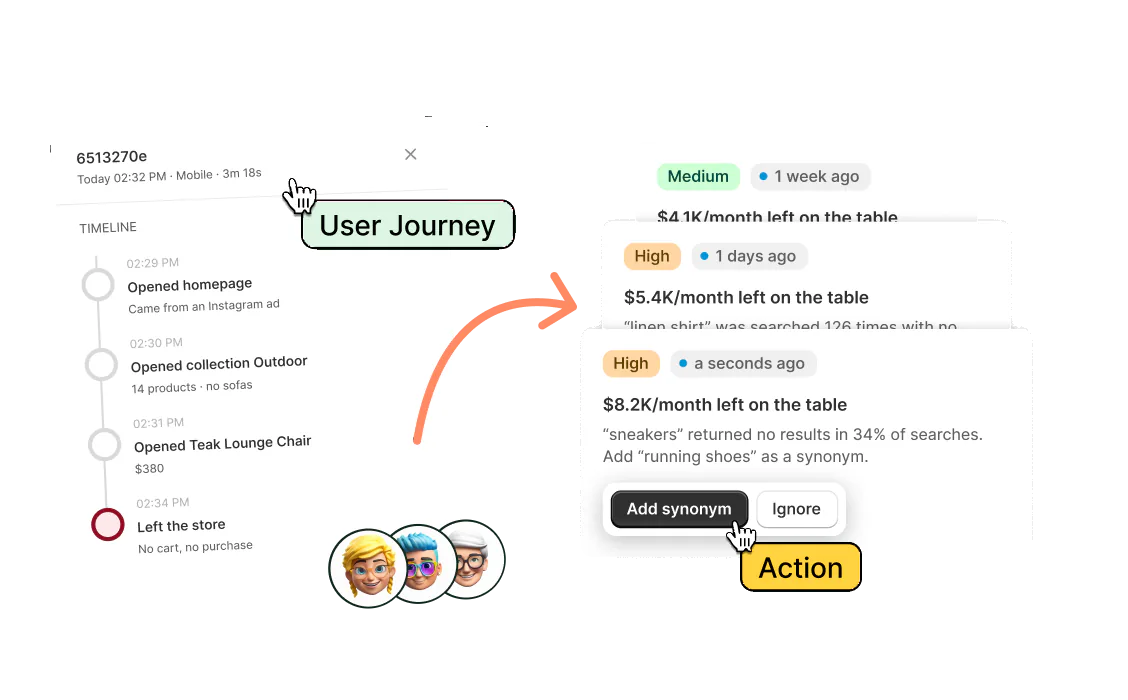
Average order value is the number Sledge is built to move. Bundles and upsell placements raise the basket, and built-in Growth Intelligence finds offer opportunities in your order patterns, estimates the monthly impact in dollars, then measures the result against real sales. Proof, not promises.