What is a product recommendation engine?
A product recommendation engine is the software that chooses which products a shopper sees next, in rows like "Frequently bought together" or "You may also like". It works from what other shoppers bought, how products resemble each other, what this shopper viewed, and rules you set. Unlike search, it shows products the shopper never typed.
How do recommendation engines work?
Engines use four main methods, and most mix them. Say a shopper opens your linen shirt, which has sold in 120 orders.
| Method | What it reads | On the linen shirt |
|---|---|---|
| Bought together | Orders that hold both products | The canvas belt, in 30 of those 120 orders |
| Similar products | Product type, brand, tags, description | A cotton shirt with the same type and tags |
| This shopper's visit | What they viewed, added to cart or saved | The sandals they opened a minute ago |
| Your rules | Hand picks, best sellers, newest first | This week's new arrivals |
A belt in 30 of 120 orders, one in four, is a pair worth showing. A hat that turns up in 2 of them is probably chance.
The textbook name for the first method is collaborative filtering, because it learns from other shoppers. The second is content-based filtering, and an engine that blends them is a hybrid. Apps differ in which of the four they lean on, and this comparison of six apps shows where each one's picks come from.
Does Shopify have a product recommendation engine?
Yes, a basic one. Shopify builds related products for every product from items often bought together and from similar descriptions (English storefronts only). When neither finds a match, it uses related collections. In the free Search & Discovery app you can add up to 10 related picks per product, plus up to 10 complementary ones (items often bought with it) that Shopify never fills in for you. You can't edit Shopify's own picks, only hide them product by product, as Shopify's help explains. Both kinds show on product pages whose theme has a section for them.
Why do recommendations look random on a new store?
The bought-together method needs orders, and a new store has only a handful. The shirt might have sold in 8, and one stray belt among them can pass for a pair. With few sales, Shopify falls back to descriptions and collections, and picks built on thin data look random. This is called the cold start problem. Until orders build up, write full descriptions if your storefront is in English, put each product in the right collections, and hand-pick the pairs for your best sellers. The product recommendations guide matches each kind of row to its spot in your store.
Product recommendations with Sledge
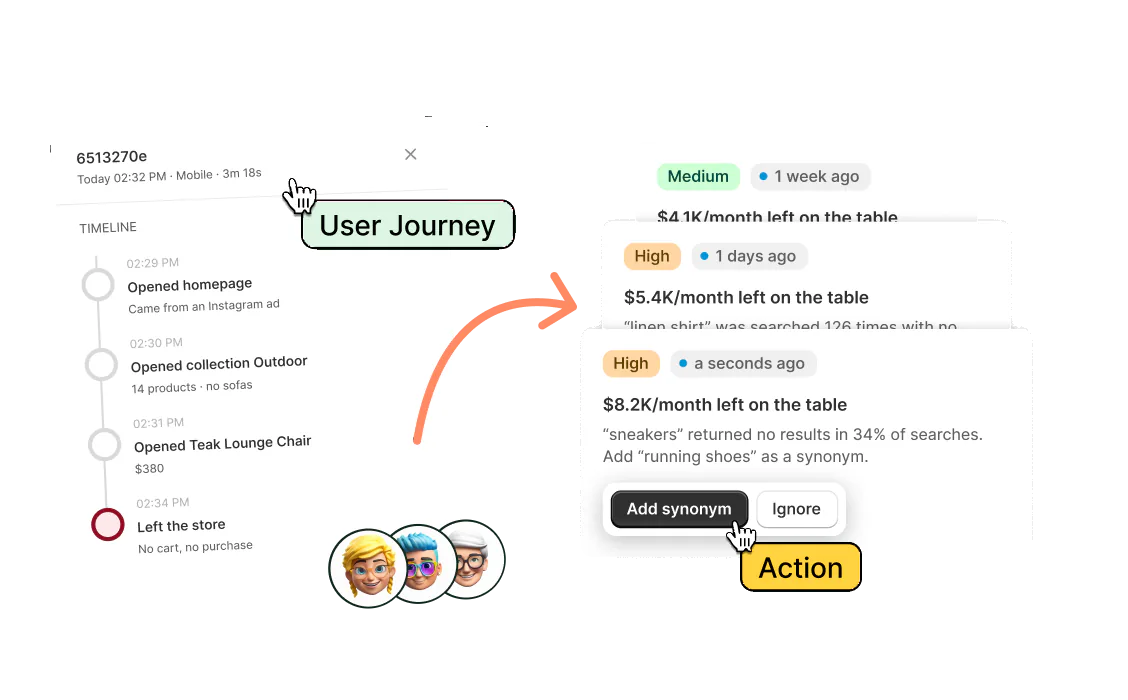
Sledge runs product recommendations in thirteen types. Frequently bought together comes from your own orders, or from related products until enough orders come in. Related products match on title, type, vendor and tags. Rows can go on your homepage, product, collection, search and cart pages. From the Pro plan up, Growth Intelligence suggests fixes and shows their combined worth as one dollar figure, labeled "Est. potential".