What is safety stock?
Safety stock is the extra stock you keep so a late delivery or a busier week than usual doesn't leave you sold out. You size it from your busiest days and your slowest delivery, and it decides how early you reorder.
How do you calculate safety stock?
Safety stock = (maximum daily sales × maximum lead time) minus (average daily sales × average lead time). Lead time runs from your order to stock you can sell. Say your best T-shirt sells 5 a day, 8 at its busiest, and your supplier usually takes 10 days but once took 14. In the worst wait you sell 8 × 14 = 112, in a normal one 5 × 10 = 50. Keep the difference: 62 shirts.
Safety stock vs reorder point
The reorder point is the stock level you order at: average daily sales × average lead time, plus safety stock. For the T-shirt, 5 × 10 + 62 = 112. Order at 112 and a normal wait leaves your 62 untouched. In the worst one, your last shirt sells as the boxes land.
How much safety stock should you keep?
Cover the worst real wait, no more. Bought at $12 each, those 62 shirts are $744 that only works in a bad week. Too much of a slowing product becomes dead stock and lowers your inventory turnover ratio. Work it out per product and size: ten left is 20 days of a scarf that sells every other day, and two days of your best T-shirt. Leave one-off sale days out of the maximum, average only in-stock days, and use your slowest real delivery, not the supplier's quote.
Does Shopify have a safety stock setting?
Shopify has a "Safety stock" label, but nothing to work out how much. In Products, then Inventory, an item's Unavailable count includes it: units on hand you can't sell. Keep your 62 shirts in Available, because a bad week is when you sell them. Stocky, Shopify's app that worked out reorder points, closed August 31, 2026. Shopify Flow's template "Get notified when product inventory is low" emails you when any variant drops below one level you set: your reorder point, if your products share one.
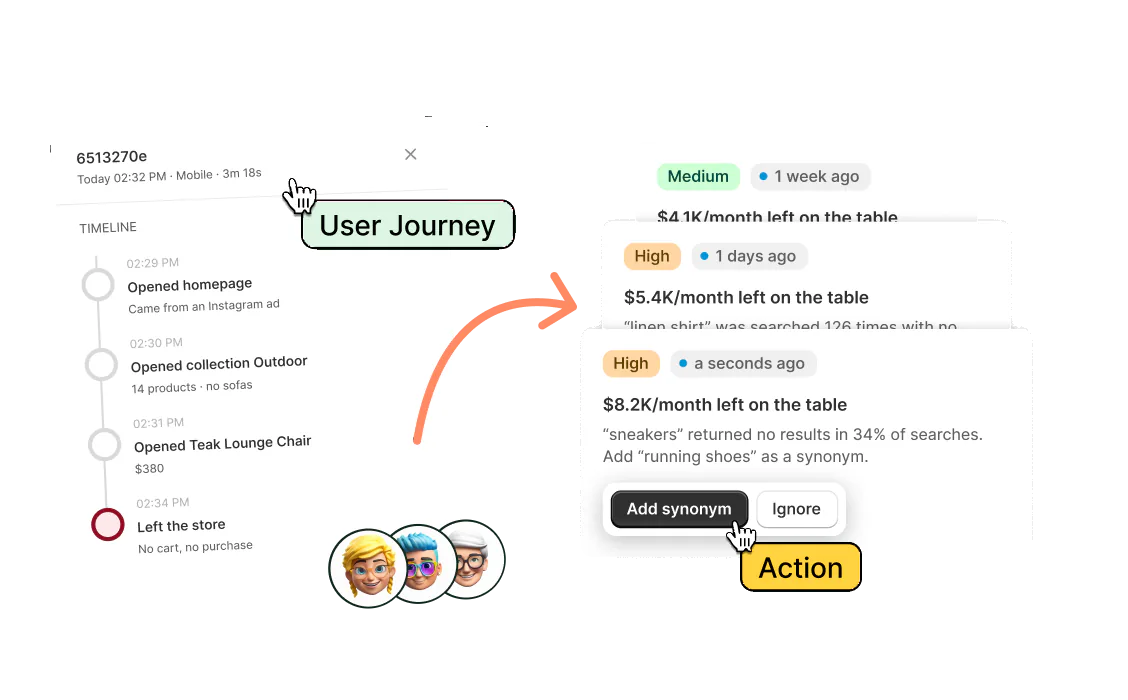
Before the shelf empties, with Sledge
Sledge does not calculate safety stock or reorder points. The Signals tab in Sledge Analytics flags "Best seller running low" when a product that sold 10 or more in 30 days would run out in under seven days. On Accelerate and up, when a sold-out product returns, Sledge Back in Stock emails shoppers who signed up. On any paid plan, Growth Intelligence also reads your stock levels and shows what its fixes could add as one dollar total, labeled "Est. potential".