What is RFM analysis?
RFM analysis is a way to group customers by their buying history. It scores each one on recency (how long ago they last bought), frequency (how many orders they placed) and monetary value (how much they spent), then sorts them into groups such as Champions and At risk.
How does RFM analysis work?
Each measure gets a score from 1 to 5. In Shopify's report, a 5 means the top fifth of your own customers on that measure, not an industry benchmark. Scores read in order: recency, frequency, monetary value. A customer in the top fifth on all three is a 555. One in the top fifth for orders and spend but the bottom fifth for recency is a 155: a regular who has gone quiet.
How is RFM analysis used for customer segmentation?
Customers with similar scores form a group, and each group gets its own message. Shopify's Help suggests early access for Champions, a strong offer for At risk customers who ordered a lot but not lately, and onboarding help for New ones. Emails and offers for returning customers are in how to get repeat customers.
Where is RFM analysis in Shopify?
Go to Analytics, then Reports, filter the Category to Customers and open "RFM customer analysis". It places everyone who has ordered in a named group, from Champions to Dormant, with each group's share of your customers and what they spent. Click a group's name and choose "Preview segment", which opens Shopify's segment editor with that group applied. Save it as a customer segment, then email it through Shopify Messaging or limit a discount to it. Shopify shows the groups, not any customer's three scores.
What are the limitations of RFM analysis?
It sees past orders and nothing else. Shopify's guide to RFM says it does not measure how profitable a customer is or explain why someone stopped buying, and that frequency does little to tell customers apart when nearly all have ordered once. Visitors who never became customers do not appear. RFM ranks what customers did. Customer lifetime value estimates what they are worth.
Before the first order, with Sledge
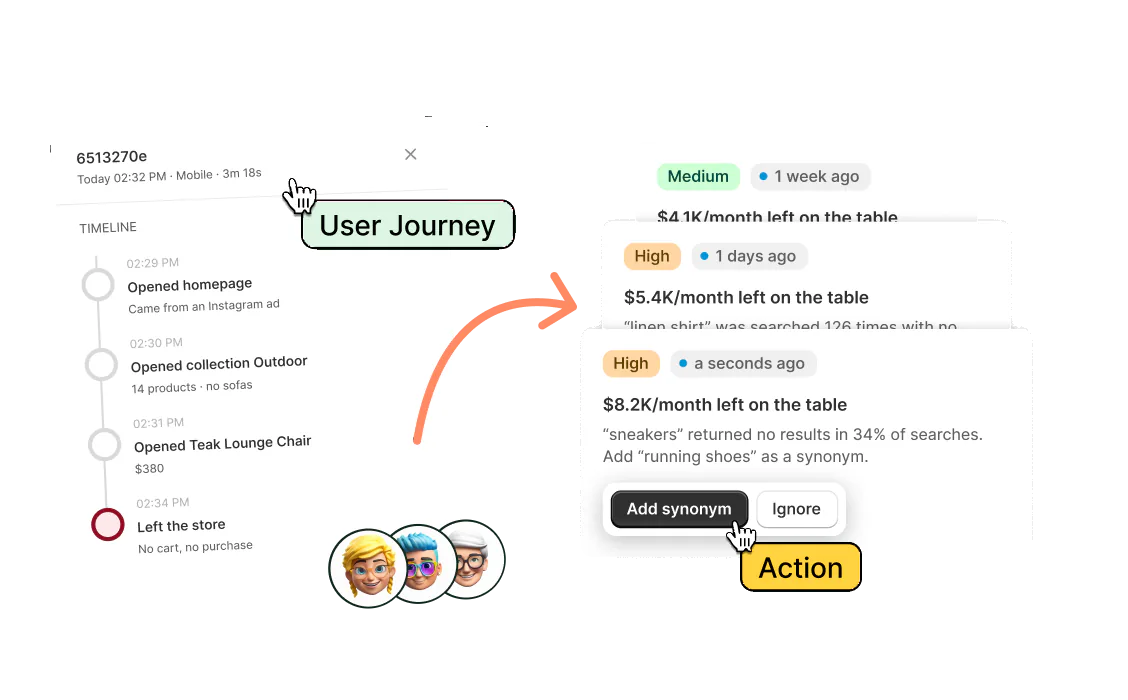
Sledge does not score customers or sort them into groups. In Sledge Analytics, the Journey tab covers the visitors RFM never sees. Its list "Sessions needing attention" shows visits that ended without a purchase and a reason Sledge can name, such as a broken link. Growth Intelligence turns on when you pick a paid plan. It reads your orders and suggests fixes, totals what they could add in one dollar figure labeled "Est. potential", then compares sales through Sledge before and after you set each fix up.