What is ROAS (return on ad spend)?
ROAS, short for return on ad spend, is the revenue your ads bring in divided by what they cost. Spend $500 on ads, make $2,000 from them, and your ROAS is 4, written 4:1, 4x or 400%. It counts sales, not profit, so a good ROAS depends on your margin.
How do you calculate ROAS?
ROAS = revenue from ads ÷ ad spend. Multiply by 100 for a percentage. Count the whole cost, not just the ad platform's bill. Shopify's blog adds agency fees for making and placing the ads, and affiliate commissions.
What is a good ROAS?
Anything above your break-even ROAS: 1 ÷ your margin after product, shipping and payment costs. At a 40% margin each $1 of sales leaves 40¢ for ads, so break-even is 2.5, as in Shopify's break-even guide. At 25% you need 4. The $500 that brought in $2,000 leaves $300 at 40%, and nothing at 25%.
A first order under break-even can still pay off through repeat orders: that is customer lifetime value.
ROAS vs ROI
ROAS compares sales with ad spend. ROI, return on investment, compares profit with what you spent. At a 40% margin, $500 of ads that brings in $2,000 has a ROAS of 400% and an ROI of 60%: $300 of profit on $500.
Where does Shopify show ROAS?
In Analytics, open Reports, set the Category filter to Marketing and open "Performance by marketing channel". It lists ad spend and ROAS only for channels that report their costs, such as a connected ad platform. A dash means no cost data, not zero. Expect your ad account to disagree: each ad platform counts sales by its own rules, so Meta and Google can both claim one order. Total sales ÷ total ad spend, often called blended ROAS, counts each order once, including sales no ad brought in.
How do you improve ROAS?
Cut ads under break-even, or earn more from visits you already pay for. Lift the conversion rate of paid visits from 2% to 2.5% and the same spend brings a quarter more sales: 4x becomes 5x. A bigger average order value works the same way. Cutting ads can lift ROAS while total sales fall, so read it beside the other ecommerce KPIs.
After the click, with Sledge
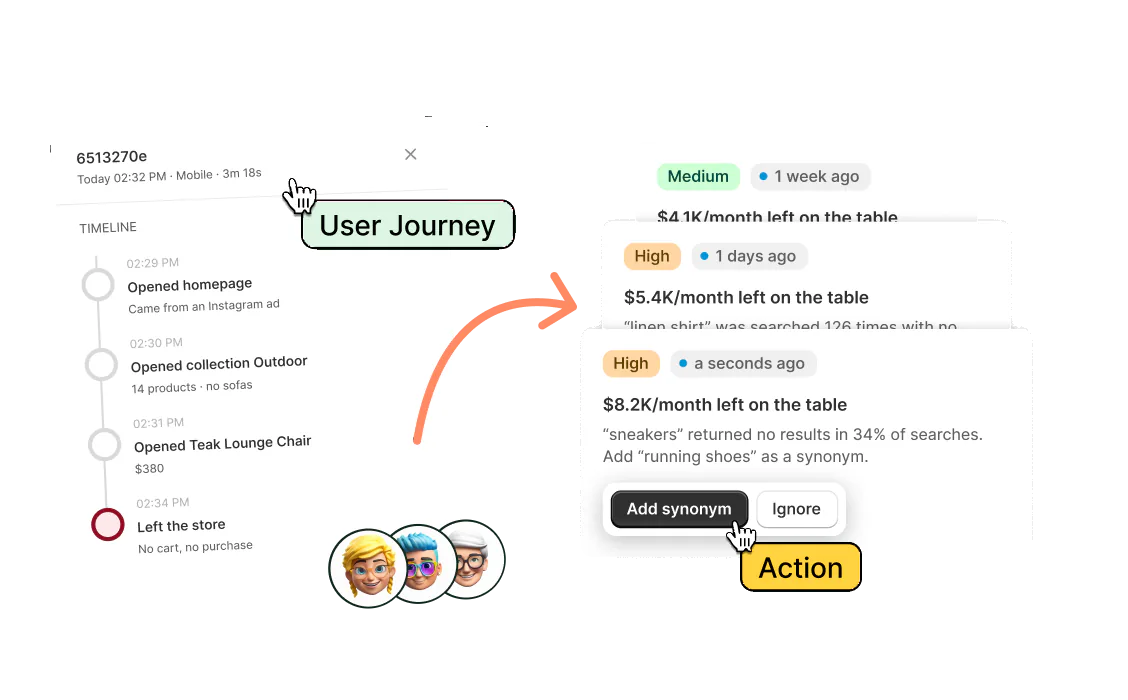
Sledge does not measure ROAS or read your ad spend. Sledge Analytics shows "Revenue from Sledge": sales of products sold in a Sledge bundle, or that a Sledge tool such as search was used on in the seven days before the order. On any paid plan, Growth Intelligence can spot two products your customers already buy together and suggest a bundle. It sums its suggested fixes into one dollar estimate, labeled "Est. potential", and compares sales through Sledge before and after each fix you set up.