What is impulse buying?
Impulse buying is an unplanned purchase, decided on the spot because something caught the shopper's eye, not because it was on a list. Online, it is often a small extra picked up beside the add-to-cart button or in the cart, such as a $12 pack of paper filters added to a $48 coffee order.
Types of impulse buying
Marketers sort impulse purchases into four types. Say you sell coffee and brewing gear.
| Type | What happens | Example |
|---|---|---|
| Pure impulse | A buy that breaks the shopper's usual pattern | A shopper scrolling past your Instagram post buys a $26 ceramic mug |
| Reminder impulse | Seeing the item recalls a need | Filters beside the beans remind a shopper the box at home is empty |
| Suggestion impulse | A first look creates the need | A shopper who never owned a milk frother pictures lattes at home and adds one |
| Planned impulse | The shopper planned to buy, and the offer decides what | A gift hunter with $40 to spend takes the gift set on offer that week |
Three of the four depend on a need, so pick an extra that fits the order.
Where do impulse buys happen in an online store?
Online, the shelf by the register becomes three spots: beside the add-to-cart button, in the cart drawer, and on the order confirmation page. Shopify's own tools cover the first. In its free Search & Discovery app, under Recommendations, you can pick up to 10 "Complementary products" for an item, the extras that go with it. A Complementary products block on your product page shows them, in themes that support it. Shopify's help advises picking items priced the same as the main product or lower. The Product recommendation conversions over time report, under Analytics then Reports, shows how often shoppers click, add to cart and buy Shopify's recommendations.
How much can impulse buys add to an order?
Say one order in five adds a $12 pack of filters. Your $48 average order value rises by $2.40, to $50.40, without a single new shopper. Keep the add-on cheap beside the cart total. Shopify's impulse buying guide suggests add-ons under $20.
When does encouraging impulse buying become a trick?
When the shopper never chose the item, or chose it because a countdown or stock count lied. Bringing Dark Patterns to Light, a 2022 FTC staff report, lists "sneak-into-basket": adding items to the cart without the shopper's permission, or through a box ticked in advance. Leave every extra unticked and let the shopper add it. For fake countdowns and stock counts, see when scarcity marketing is fake. Shopify's guide warns that these tricks risk more returns and cancellations.
Small extras where shoppers decide, with Sledge
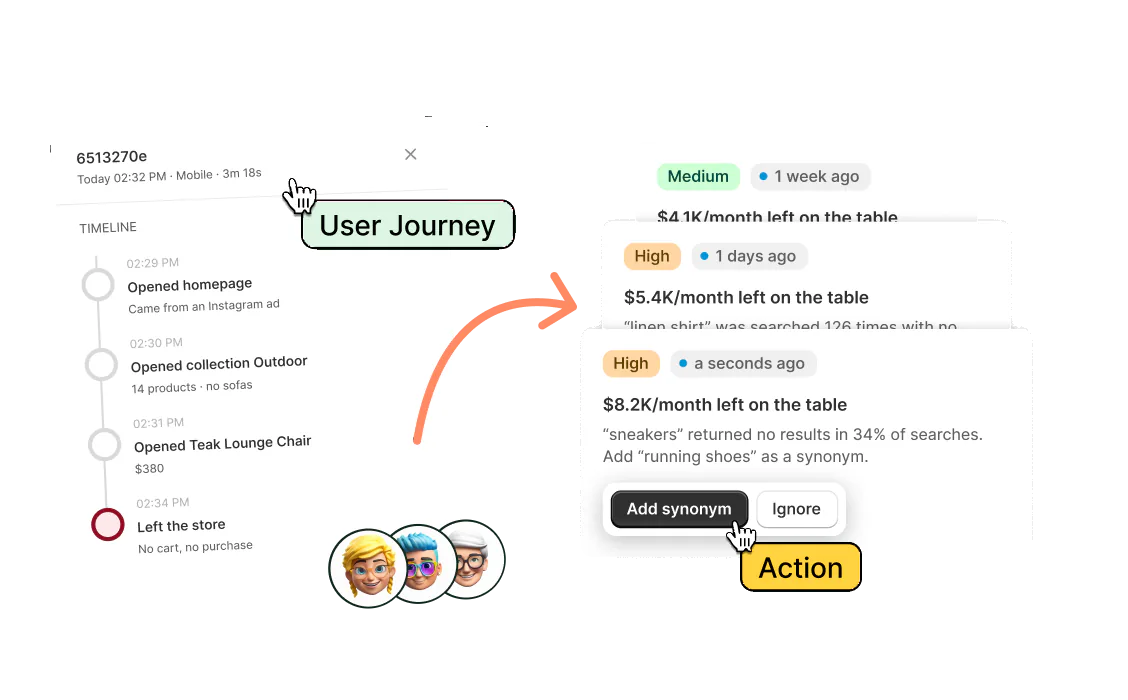
Sledge does not tell you which orders were impulse buys. Its cart drawer can show a row of product recommendations, best sellers by default, with an optional discount. The drawer can also show a progress bar toward free shipping, a cart discount or a free gift. Sledge add-ons sit on the product page, unticked until the shopper taps one. Growth Intelligence turns on when you pick a paid plan. It suggests fixes from your orders, searches and carts, then totals the sales they could add as one figure in your store's currency, labeled "Est. potential".