What is inventory carrying cost?
Inventory carrying cost, also called holding cost, is what keeping unsold stock costs you each year: storage, insurance, damage, and the cash tied up in it. You write it as a percentage of your average inventory value, so $9,000 a year to hold $40,000 of stock is 22.5%.
How do you calculate inventory carrying cost?
Inventory carrying cost % = a year's cost of holding stock ÷ average inventory value × 100. Average inventory value is your stock at cost, across the year, as in the inventory turnover ratio.
Inventory carrying cost example
Say your stock averages $40,000 at cost. A year of holding it costs $4,000 for the cash tied up (10%, as loan interest or what it could earn elsewhere), $2,400 for a storage unit at $200 a month, $800 for insurance and $1,800 for items lost, damaged or sold at a loss. That is $9,000, and $9,000 ÷ $40,000 × 100 = 22.5%. At that rate, $6,000 of dead stock costs about $1,350 a year.
What is a typical inventory carrying cost percentage?
Most retailers spend 20% to 30% of average inventory value a year on carrying costs, often more in fashion and home goods, per a 2026 benchmark in Shopify's guide to inventory costs. Guides quote other ranges, so your own figure matters more.
Where do you find your inventory value in Shopify?
In Analytics, open Reports, set the Category filter to Inventory and open "Month-end inventory value". Its headline figure, "Ending inventory value", is your stock at cost on the last day you pick. Read it for the start and end of the year and average the two. A size or color with no "Cost per item", what one unit costs you, is left out of that figure, as is untracked stock. Shopify has no report for what it costs to hold stock, so take storage, insurance and loan costs from your invoices and statements.
How do you reduce inventory carrying cost?
Hold less of what sells slowly. Mark down what has stopped selling, pair it with a bestseller or move it up your collections, and buy less. Keep enough safety stock that cutting does not leave you sold out.
Stock that isn't selling, with Sledge
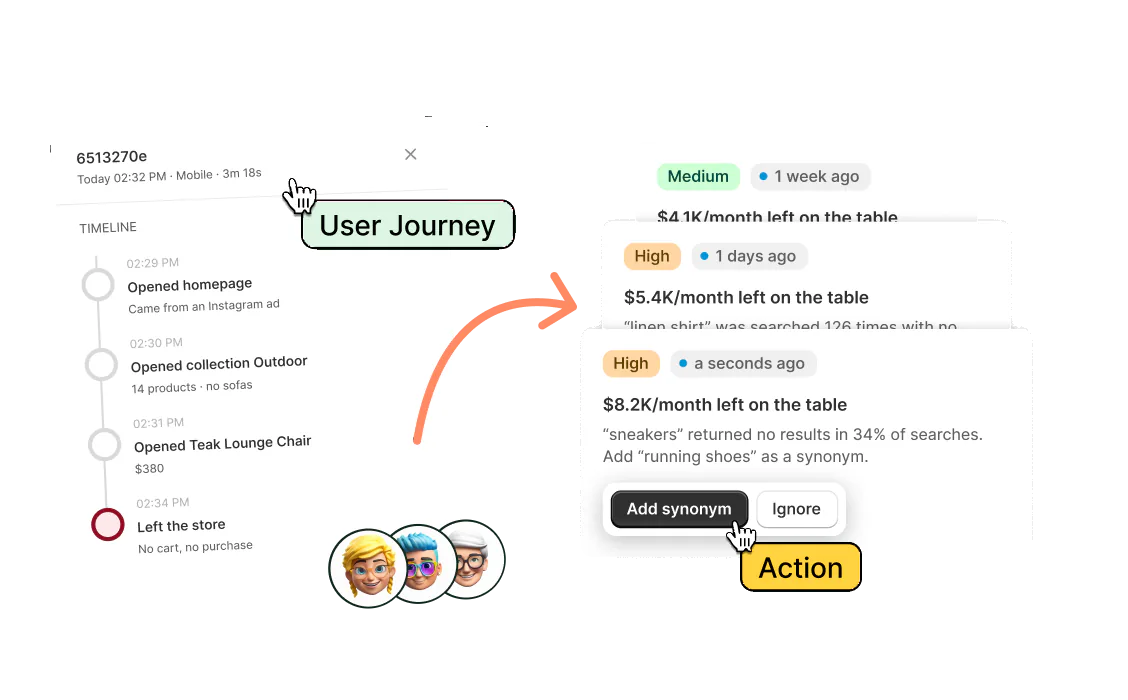
Sledge does not work out carrying cost. In Sledge Analytics, the Signals tab flags "Stock not selling" once 10 or more stocked products have sold nothing in 30 days, with a "Create a bundle" button. Growth Intelligence, on any paid plan, can flag products with no sales in the last 90 days and suggest a merchandising rule to move them up your collections. It sums what all its fixes could add into one dollar figure, labeled "Est. potential".