Return fraud is a return the shopper knows doesn't qualify: an empty box, a worn or swapped item, or a false claim that the order never came. Return abuse stays inside a loose policy, like buying two sizes to keep one. In Shopify, start with a policy asking for unworn items, a return window and your approval of each request.
The label scanned, so you refunded. Today the parcel lands on your bench, and inside is a dress with the tags cut off. The one after it holds nothing at all.
What is return fraud?
Return fraud is a return made on a lie: about what's in the box, what happened to the order, or whether the item qualifies. The shopper gets a refund, store credit or a new item, and you get back less than you paid out, or nothing. Online, it looks like any other return request until the parcel is opened.
Return fraud or return abuse: which is which?
Return abuse breaks no rule you wrote. Buying a dress in two sizes to send one back, called bracketing, is fine unless your policy says otherwise, and so is a shopper who returns half of every order. Both cost you shipping and handling, but neither is a lie.
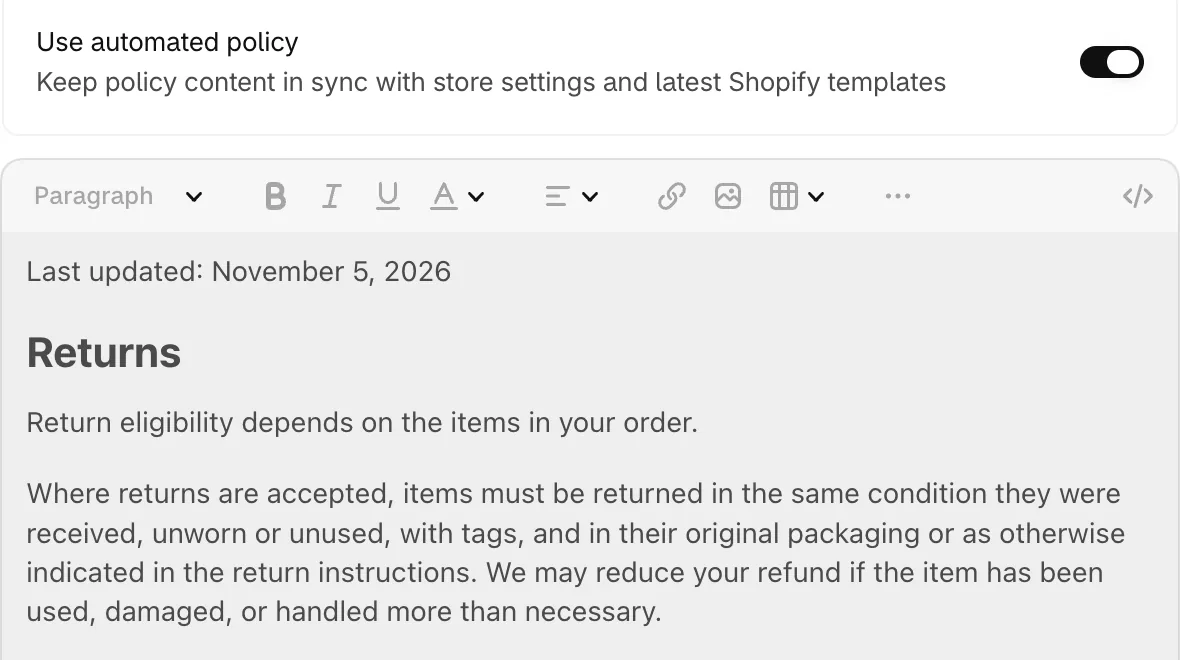
Wardrobing sits on the line: wear it once, then return it as new. Your written policy decides which side of the line it falls on. With "Use automated policy" switched on, the return and refund policy Shopify writes asks for items "unworn or unused, with tags" and says a refund may shrink for an item that was used or damaged. With that sentence live, a worn dress is a return you can decline or refund in part.
What are the common types of return fraud?
- Wardrobing: worn or used once, often for an event or a trip, then sent back as new.
- Empty box or swapped item: the parcel holds nothing, a cheaper item, an old one or a fake.
- Fewer items than claimed: the request lists three, and two arrive.
- Fake tracking: the label gets scanned, then the parcel heads for another address and never reaches you.
- "Item not received" claims: tracking says delivered, the shopper says it never came and asks their bank for the money back.
- Receipt fraud and stolen goods: in-store schemes, where a fake receipt or a shoplifted item buys a refund at the counter. Online, every return starts from an order in your admin, and the nearest cousin is an order paid with a stolen card.
- Bracketing and serial returns: abuse rather than fraud, as long as the policy allows them.
How common is ecommerce return fraud?
The National Retail Federation and Happy Returns found that 9% of all returns are fraudulent, in their 2025 Retail Returns Landscape report. Of the retailers that track it, 71% saw more returns with fewer items than claimed, 65% more empty boxes and 64% more decoys such as counterfeits. Close to two-thirds of shoppers in the same report admitted at least one costly return habit, from wardrobing and bracketing to empty boxes. Every retailer it surveyed had over $500 million in revenue, so your own rate may look nothing like 9%.
How do you stop return fraud on Shopify?
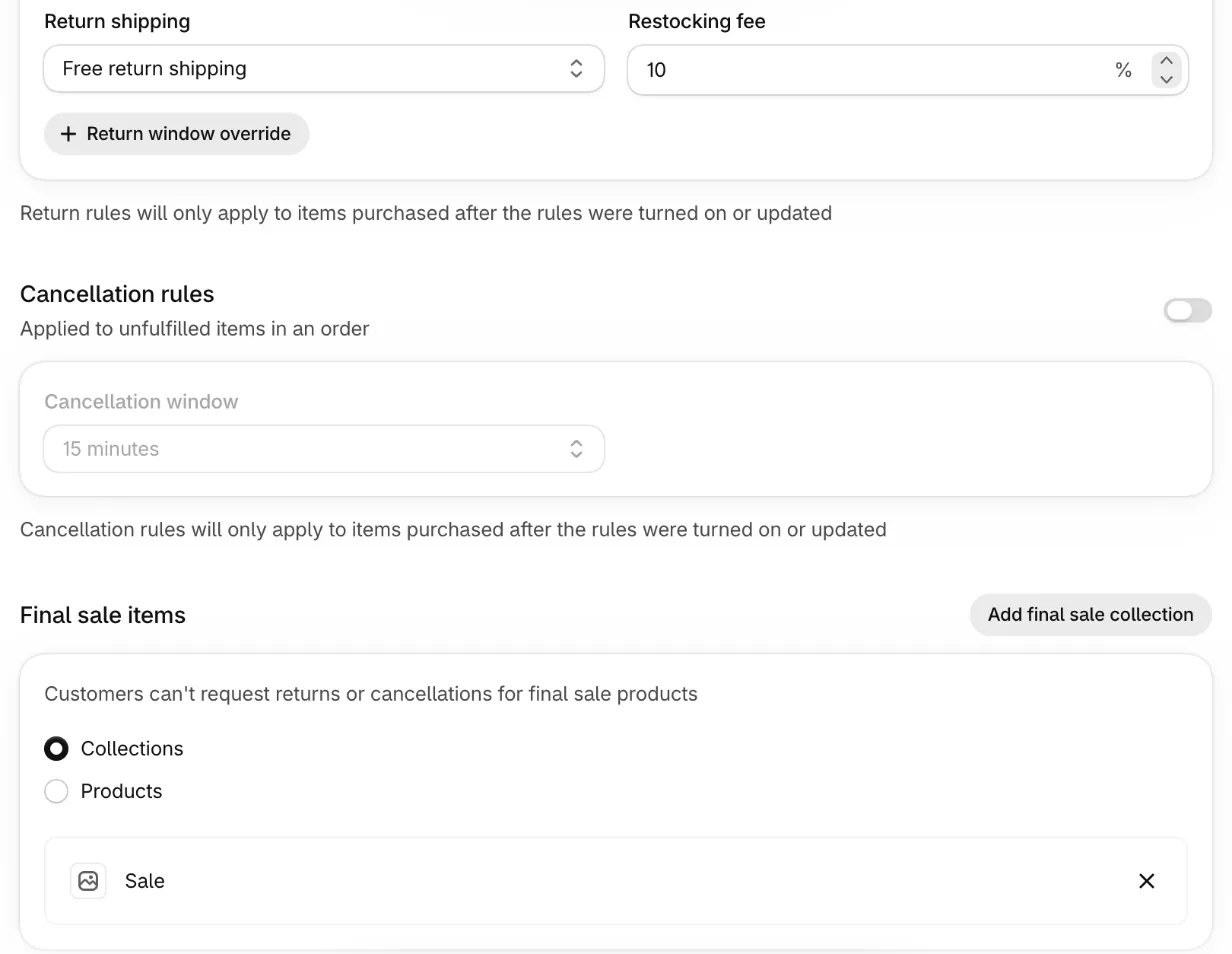
Start with the return rules, which set what a shopper can send back and for how long. In your Shopify admin, open Settings, then Policies, and click "Default rules", the rules each new order follows. Turn on "Return rules" and pick a return window. If return rules were off when an item was bought, shoppers can request a return of it with no time limit.
Add a restocking fee if your policy has one, and shoppers see it when they ask. List what can't come back under "Final sale items", by collection or by product, such as custom, personal care or deeply discounted pieces. Shoppers can't request a return for those at all. Selling to the EU? Shoppers there get a 14-day right of withdrawal, so your window has to give them at least 14 days from delivery of the last item. Shopify Help covers the settings for it.
Each self-serve request waits on its order under "Return requested" until you approve or decline it. A decline asks for a private reason and a message to the shopper. Before you approve, open the customer's profile and check their other orders for earlier returns. If you find several, add a staff note or a tag, so the next request gets a closer look.
What should you check before you refund?
Refund when the item is in your hands, not when the label scans. Your admin never marks a Shopify return label as delivered, so track the parcel with the carrier. When it arrives, photograph it before you open it, weigh it, and check the item and its tags. Click "Process return" only for what came back.
If an item is missing, use "Remove return items" on the return, and what you owe the shopper drops to match. For a return you doubt but can't disprove, your policy can offer store credit or an exchange instead of money back. Under "Refund method", pick the original payment, store credit, or a split of the two. Store credit isn't available on legacy customer accounts.
What about "item not received" claims and chargebacks?
A false "never arrived" claim can skip the return and go straight to the shopper's bank. If the parcel really went missing, that is a job for shipping protection instead. A chargeback takes the disputed amount and a fee from you right away, $15 on Shopify Payments in the US, and you usually get 7 to 21 days to answer. If tracking shows the parcel delivered, Shopify attaches the order's tracking record for you. Add any delivery photo or signature the carrier has. For a shopper who says they sent it back, send your return policy, when they saw it, your emails, and whether the return arrived.
Once a chargeback starts, you can't refund that payment in Shopify, so answer it with evidence instead. Shopify Protect is free for US stores with a US Shopify Payments account, on eligible Shop Pay orders, and it pays back only chargebacks for charges the cardholder didn't authorize or recognize. It doesn't cover a parcel claimed missing or an item called not as described, and it never covers a return. Shopify's fraud analysis flags orders at risk of a fraud chargeback, such as one paid with a stolen card, so you can look before you ship.
When does a returns app help?
Shopify gives you the rules and the final say on each request. A returns app helps once there are too many requests to read one by one, because its rules act on their own. Loop's listing names workflows, custom rules and blocklists against return fraud. AfterShip lists fraud prevention on its Premium plan, and Return Prime lists fraud analytics and controls on its Thrive AI plan. Plans, prices and what 50 returns a month cost on each are in our returns app comparison.
FAQ
Questions, answered
-

14-day free trial
Explore Sledge on your store before you decide to commit.
-

No credit card required
Start improving your store with no upfront commitment.
-

Setup in minutes
Get Sledge running without a lengthy setup process.
-

Built to grow sales
Turn shopper behavior into actions that help you sell more.
What is return fraud?
Return fraud is a return made on a lie: an empty box, a cheaper or worn item sent back as new, fewer items than the request lists, a faked tracking trail, or a false claim that the order never came. The shopper gets money, store credit or goods they aren't owed. Return abuse, by contrast, stays inside your policy.
What is the difference between return fraud and return abuse?
Return fraud breaks your policy on purpose, with a lie about the item or the order. Return abuse uses what the policy allows, such as buying two sizes to keep one or returning half of every order. Wardrobing counts as fraud when your policy asks for unworn items with tags, and as abuse when it says nothing.
How common is return fraud?
The National Retail Federation and Happy Returns found that 9% of all returns are fraudulent, in their 2025 Retail Returns Landscape report. Of the retailers that track it, 65% saw more empty boxes. Every retailer in that survey had over $500 million in revenue, so a small store's rate may look nothing like 9%.
Does Shopify Protect cover return fraud?
No. Shopify Protect is free and covers chargebacks for unauthorized or unrecognized charges on eligible Shop Pay orders, for US stores with a US Shopify Payments account. The order must ship with tracking from a supported carrier within 7 days. It doesn't cover returns, parcels claimed missing, or items called not as described.
How do you prevent return fraud on Shopify?
Ask for unworn items with tags in your return and refund policy, turn on return rules with a window, and mark what can't come back as final sale. Approve each return request yourself after checking the customer's other orders. Refund only after the parcel arrives and you've checked what's inside.
Return fraud is one leak. What are the others worth?
Sledge can't tell an honest return from a bad one. It runs your store's search, filters and offers instead, with a 14-day free trial. On a paid plan, Growth Intelligence works through your orders and searches, points to the sales your store misses, and puts a dollar total on them under "Est. potential".