What is omnichannel?
Omnichannel means every place you sell, such as your online store, a shop counter or a market stall, works from one stock count, one customer list and one order history. A shopper can browse online and buy at your counter, or buy online and collect in person.
Omnichannel vs multichannel: what's the difference?
Multichannel means you sell in several places. Omnichannel means those places share what they know.
| What differs | Multichannel | Omnichannel |
|---|---|---|
| Stock | A count per channel, so the last unit can sell twice | One count that a sale anywhere updates |
| Customers | A stranger in each channel | One profile holding every order |
| The shopper | Starts and finishes in one channel | Can start in one and finish in another |
What does omnichannel retail look like for a small store?
These three assume you also sell in person.
- One stock count: say you hold 6 scarves and sell 4 at a market stall on Shopify POS. If the stall's POS location also fulfills online orders, your online store has 2 left to sell. With a notebook tally, the store still offers 6 and can take orders for 4 scarves you no longer have.
- Buy online, collect at the counter: turn on "Pickup in store", the checkout option to collect an order in person, under Settings then Shipping and delivery.
- One customer, every order: a shopper who ordered online pays at your counter. Find them by email in Shopify POS, and the sale joins their past orders.
Sales channels such as Instagram, Amazon and the Shop app plug into the same admin. At one US chain, shoppers using several channels outspent single-channel ones by 4% per store trip and 10% online, per a 2017 Harvard Business Review study. It shows a pattern, not a cause.
What is omnichannel marketing?
Omnichannel marketing carries one offer across your emails, posts and counter. A Shopify discount code works on every sales channel you've set up, your counter included. An automatic discount skips the counter unless you switch it on for POS, which needs a POS Pro location. In customer support, the word means one history for every email, chat and call; see ecommerce customer service.
How do you build an omnichannel strategy?
- List every place you sell, and where shoppers first hear of you.
- Run them from one admin, with one product list, stock count and customer list.
- Connect two of them first, for example with pickup at your counter, and get that running before the next.
- Every month, compare what each channel sells in a Shopify sales report, under Analytics then Reports.
Search and filters for your online store, with Sledge
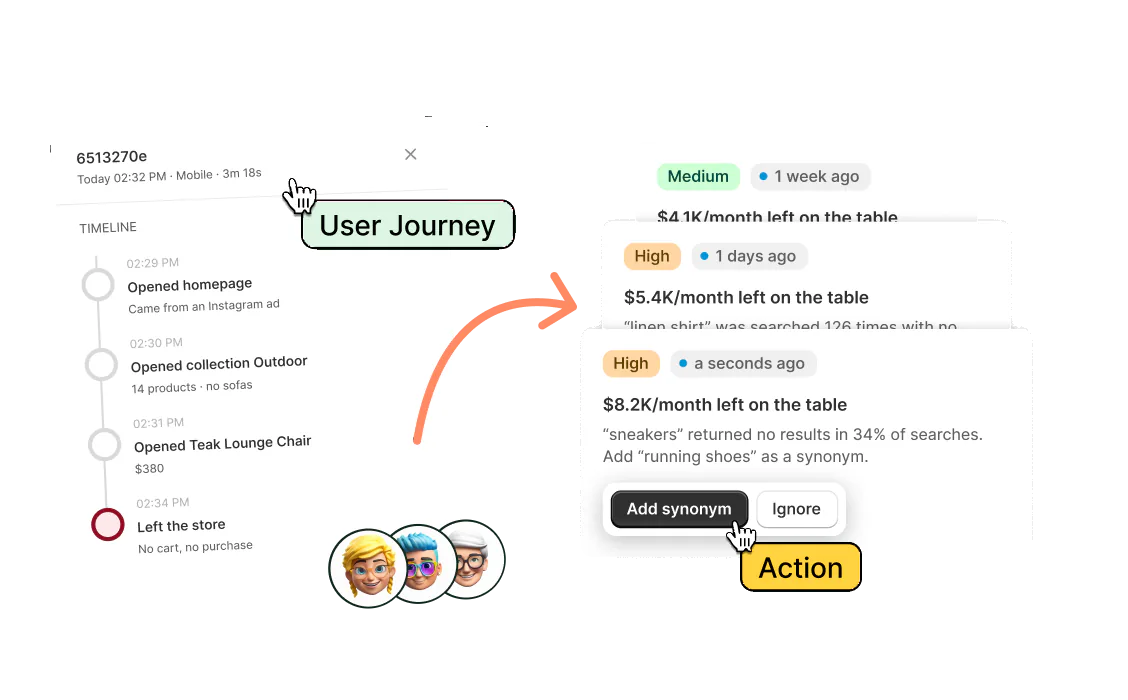
Sledge does not run at your counter or connect your sales channels. On your online store, it runs search, filters and bundles. Sledge Analytics shows which site or campaign each visit came from. Growth Intelligence turns on when you pick a paid plan. It totals the sales its suggested fixes could add as one dollar figure, labeled "Est. potential".