Three of these 10 ecommerce business ideas need no stock: print on demand, dropshipping and digital products. Handmade goods, resale and art start with a few pieces. A clothing line, private label, subscription boxes and wholesale need stock first. Start with the one you can test for the least.
Your Shopify trial is open and the store is empty. Every list you read says pet products or eco-friendly goods, and none says what you would buy, pack or pay before the first order. That part decides whether an idea fits your budget.
What does each ecommerce business idea need before the first sale?
The bill before your first sale runs from nothing for digital products to samples and a first production run for a clothing line.
| Idea | What you buy first | Who ships | The catch |
|---|---|---|---|
| Print on demand | Nothing but samples | The printer | The printer's cost per item leaves a thin margin |
| Dropshipping with Shopify Collective | Nothing | The supplier's store | Your shipping promise rests on the supplier |
| Digital products | Nothing | Nobody: the shopper downloads it | A file can be passed on once it's sold |
| Handmade goods | Materials for a small run | You | Your hours cap how many you can make |
| Resale and vintage | Single pieces you find | You | Each find sells once, then you hunt for the next |
| Art and prints | Your own work | You or your printer | Demand is hard to predict, and work can get copied |
| Your own clothing line | Samples and a first production run | You | Returns and sizing problems run high |
| Private label | A first order with your brand on it | You | Unsold units stay on your shelf |
| Subscription boxes | Each box's contents | You | Shoppers cancel, and every box ships on a schedule |
| Wholesale to other stores | Enough stock for bulk orders | You | Each piece sells for less than at retail |
Which ecommerce business ideas need no stock?
Print on demand, dropshipping and digital products let you sell before you buy any stock.
1. Print on demand
Apps such as Printful, Printify and Gelato print, pack and ship each item after a shopper pays, and bill you for each order they fill. Shopify puts a t-shirt company's average profit margin at 15% to 25%, and our print-on-demand guide works one $20 tee through to what you keep.
2. Dropshipping with Shopify Collective
With Shopify Collective, you sell products from other Shopify stores without buying any of them.
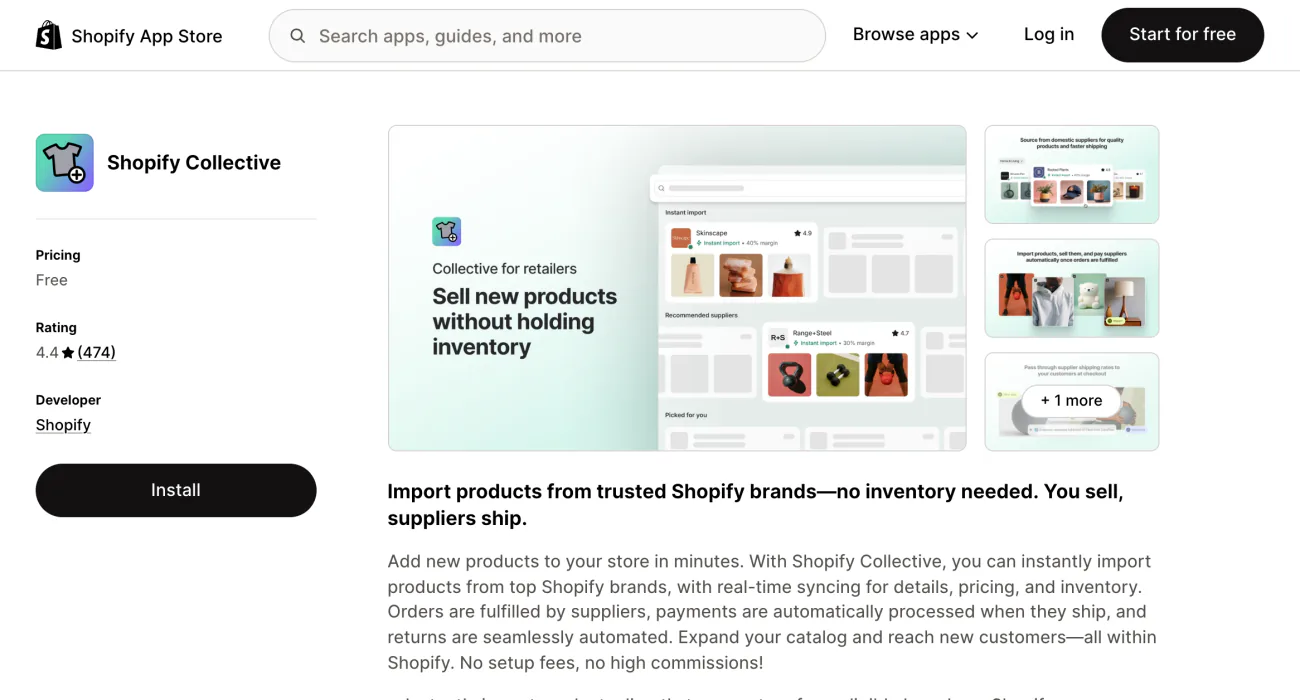
Shopify's Help Center says margins vary by supplier, from 20% to 50% in most cases. Shopify's guide to online business ideas prices a dropshipping store's start at $100 to $500 for the website and apps. The supplier ships on its own schedule, but the promise to your shopper is yours. The FTC expects you to have a reasonable basis for any shipping time you state, and for shipping within 30 days when you state none. Our Shopify Collective guide covers who can join.
3. Digital products
Templates, patterns, presets and ebooks sell with no stock and no parcel. Shopify's Digital Products app gives the shopper a download link after payment.
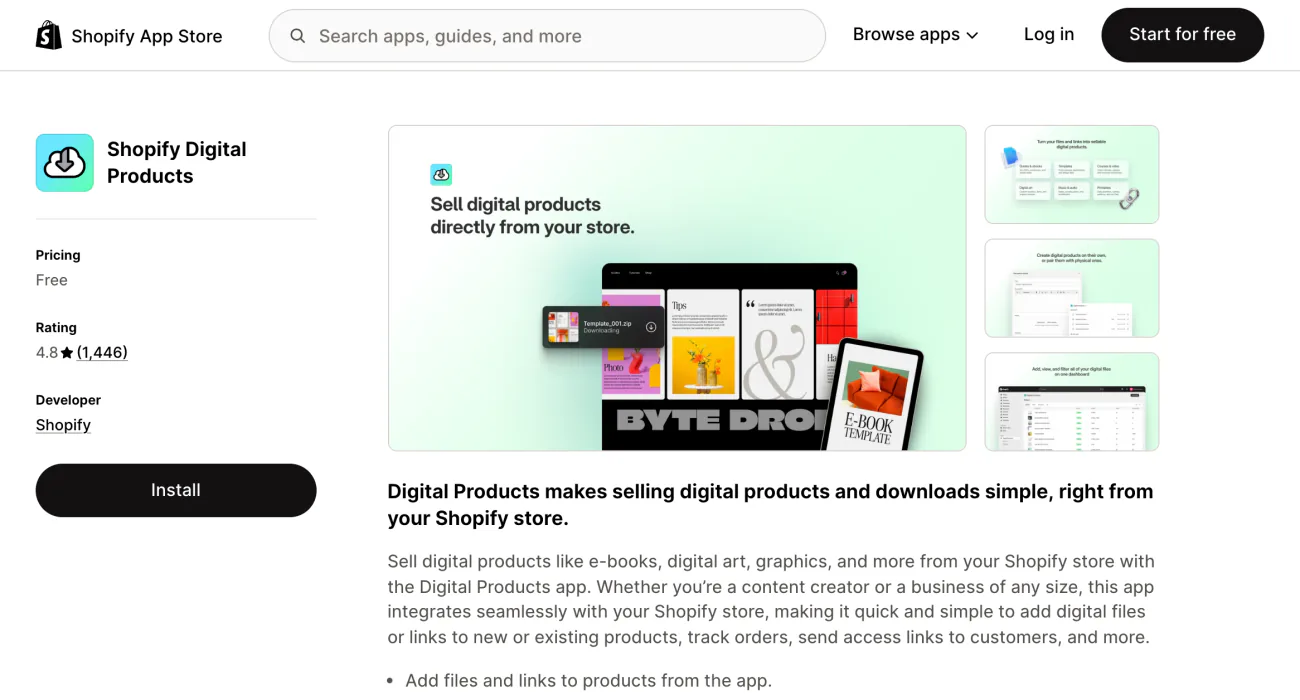
On each digital product, switch off Physical product, the setting in its Shipping section, so checkout charges no shipping. Selling to shoppers in the EU means charging VAT at the rate of their own country.
Which ideas start with a few pieces you make or find?
Handmade goods, resale and art need a small first batch, and you pack most orders yourself.
4. Handmade goods
You make candles, soap, jewelry or ceramics in small runs. Shopify's guide puts the low end at materials and a few listing fees. It also calls handmade time-intensive and hard to scale, so price your hours into every piece.
5. Resale and vintage
You buy thrift finds or used designer pieces one at a time. Shopify's guide warns of hidden damage and low resale value, so check each piece before you pay for it. Our guide to selling clothes online covers used pieces.
6. Art and prints
An original sells once, and a print of it can sell many times. Prints can come from a print-on-demand app or a small run you ship yourself. Our guide to selling art online works a $600 original through four places to sell it.
Which ideas need stock before you sell?
A clothing line, private label, subscription boxes and wholesale put your cash into stock before the first order.
7. Your own clothing line
You pay a maker for samples, then for a first production run of your designs, before you sell a piece. Each style then comes in several sizes, and every size needs its own stock. Shopify's guide names high returns and sizing issues as the challenges to plan for.
8. Private label
With private label, a manufacturer makes a product to your spec and puts your brand on it. You pay for the first order, the packaging and the photos before any sale. In return, the price and the brand are yours.
9. Subscription boxes
A themed box ships every week, month or year, and Shopify's free Subscriptions app bills the shopper each time. You buy each box's contents ahead of the ship date, so a cancellation can leave stock behind.
10. Wholesale to other stores
You sell in bulk to shops that resell your product. Shopify B2B runs on the Basic, Grow, Advanced and Plus plans, with company accounts and catalogs of wholesale prices. You need enough stock to fill a bulk order on time. Our Shopify B2B guide covers the setup.
Should you start on Etsy or your own store?
A marketplace sends you its shoppers and takes a cut of every sale, while your own store bills a monthly plan and you own the customer list. Etsy takes $0.20 per listing, then 6.5% of both the item price and whatever you charge for shipping, with a payment processing fee on top. On Shopify, Basic runs $39 a month, or $29 a month billed yearly, and a standard card paid online costs 2.9% + 30¢. Etsy vs Shopify fees finds the sales level where the two cost the same, and Amazon vs Shopify works through one sale on Amazon.
How do you pick the idea that fits you?
Pick the idea you can test for the least money, sold to a group you already know. Shopify's guide asks five questions: do you have the skills, is there a clear customer problem, can you test it cheaply, how fast will you know, and can it grow without the same effort on every sale. Shopify surveyed 500 people who run Shopify stores in late 2025, and 57% had checked their idea against their own experience.
"Coffee" is too broad to sell to. "Coffee gear for people who camp" names who buys and where they gather.
How do you test an idea before you buy stock?
Get a few strangers to pay before you order a full batch.
- Check search demand on Google Trends, which charts whether interest holds all year or spikes once.
- Read the one-star and two-star reviews of similar products, where buyers say what they wish were different.
- Put one product page or landing page live with a waitlist or pre-orders, and send it to the group you picked.
- Work out your margin on one sale. Open Cost per item, the cost field in the product's Price section, and enter what one unit costs you.
- Order a small first batch only after people have paid.
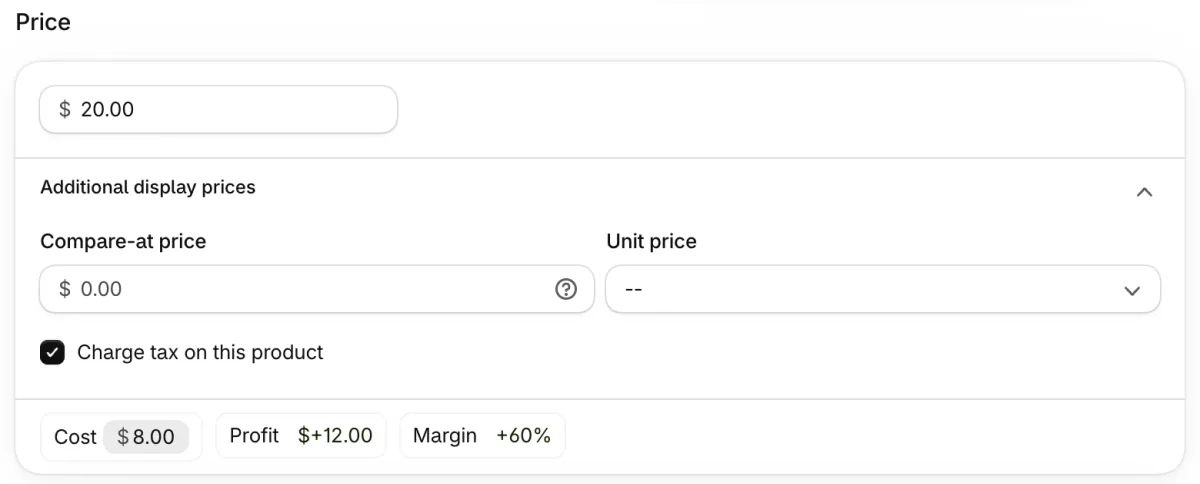
Divide your fixed monthly costs by the profit on one sale, and you have your break-even point: the number of sales a month that covers them.
FAQ
Questions, answered
-

14-day free trial
Explore Sledge on your store before you decide to commit.
-

No credit card required
Start improving your store with no upfront commitment.
-

Setup in minutes
Get Sledge running without a lengthy setup process.
-

Built to grow sales
Turn shopper behavior into actions that help you sell more.
What is the most profitable ecommerce business?
No idea is profitable by category alone. For a t-shirt company, Shopify's print-on-demand guide gives 15% to 25% as the average profit margin. Shopify's Help Center says Shopify Collective margins vary by supplier, from 20% to 50% in most cases. Ads, shipping and returns decide what each sale leaves you, so work out one sale before you pick.
How much does it cost to start an ecommerce business?
Shopify's own guide puts it at $0 to more than $5,000. A dropshipping store takes about $100 to $500 for the website and apps, and developing your own product with stock can cost $5,000 or more. On top comes the Shopify plan: three days free, $1 a month for the next three months, then $39 a month on Basic.
Can you start an ecommerce business with no inventory?
Yes. With print on demand, a printer makes each item after it sells. With Shopify Collective, another Shopify store ships its own products from your orders. Digital products need no stock or shipping at all. The first two leave you less per sale, because you pay the supplier for every order.
What can I sell online to make money?
Pick what to sell online by three tests: a group you know already buys it, it ships cheaply, and you can try it before you buy stock. In a 2025 Shopify survey of 500 people who run Shopify stores, 57% checked their idea against their own experience. Start from what you know, then send one product page to that group.
What is the easiest ecommerce business to start?
Digital products and print on demand take the least to start: no stock, and nothing for you to pack. Shopify's free Digital Products app delivers a download link after payment, and Printful, Printify and Gelato cost nothing to install. Easy to start is not easy to sell, so test the idea before you pay for ads.
What online business ideas don't need products?
Services, courses and affiliate links. Shopify's list of online business ideas includes freelancing, coaching, online courses and affiliate marketing, which sell your time, knowledge or audience instead of a product. A digital product, such as a template or a recorded course, sits between a service and a product: made once, sold as a file.
Picked your idea? Let shoppers tell you what to stock next.
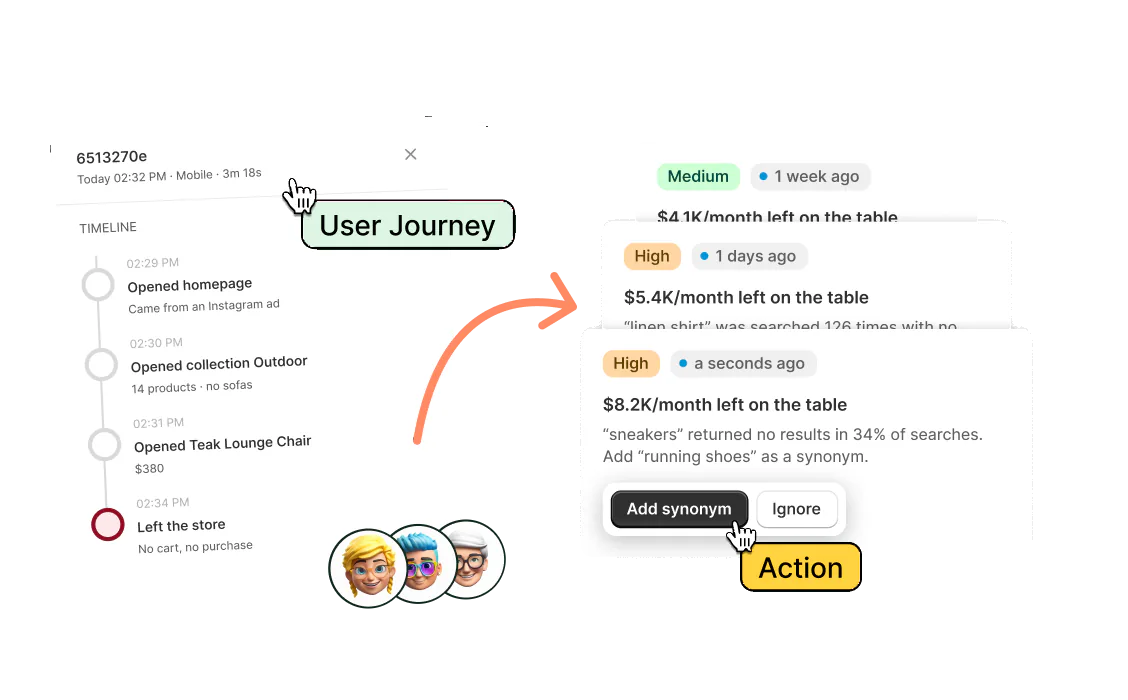
Sledge doesn't find suppliers, hold stock or ship orders. Try it free for 14 days. Once its search runs on your store, the Signals tab flags a search term that came back empty five or more times in a week, with the fix "add a synonym, or stock the product." On a paid plan, Growth Intelligence adds up its suggested fixes in one dollar figure, labeled Est. potential.