What is private label?
Private label means a manufacturer makes a product and you sell it under your own brand. You set the recipe, materials or fit, and only your store sells that version. Say a skincare lab fills 500 jars of a moisturizer you specified and puts your label on each: that cream is private label.
Private label vs white label
White label is the ready-made version: the maker sells one product to any seller, and each adds a label.
| Private label | White label | |
|---|---|---|
| Made to | Your spec | The maker's spec |
| Sold by | Only you | Any seller who orders it |
| What you change | Recipe, materials, fit, packaging | Your label and box |
| First order | Bigger and slower | Smaller and faster |
White label is quicker to test, but the same jar can sit in three other stores, one cheaper than yours.
Private label products: examples by type
Store brands are private label at scale. PLMA puts US store-brand sales at a record $282.8 billion in 2025. In your own store:
- Clothing: a tee cut to your size chart, with your neck label.
- Skincare: a lab's serum in your scent and your bottle.
- Coffee: a roaster's blend made to your taste, in your bag.
- Pet treats: a recipe without the one ingredient your customers avoid.
How to find private label manufacturers
Shortlist makers on sourcing sites or at trade shows. Ask each for its minimum order per product, unit price at two quantities and lead time. Pay for a sample first. A bigger run usually lowers the unit price and ties up more cash: 500 jars at $6 is $3,000, while 2,000 at $4 is $8,000. The bigger run saves $2 a jar but needs $5,000 more up front. Once you pick, a purchase order puts the quantity and price in writing.
How to list private label products on Shopify
Each product has a "Vendor" field for the maker or brand behind it. It defaults to your store name, and Shopify's own themes can show it to shoppers. Keep your brand there, not the factory's. Click "Cost per item" in the Price section and enter what the factory charged you for one unit, once for each size or color. Shopify then shows your profit margin there, unless your prices include tax and you charge tax on that product.
A private label product may have no barcode number. Without one, Google Merchant Center takes your brand and a part number instead. If you want a barcode anyway, GS1 US licenses one for $30.
Reviews for your own brand, with Sledge
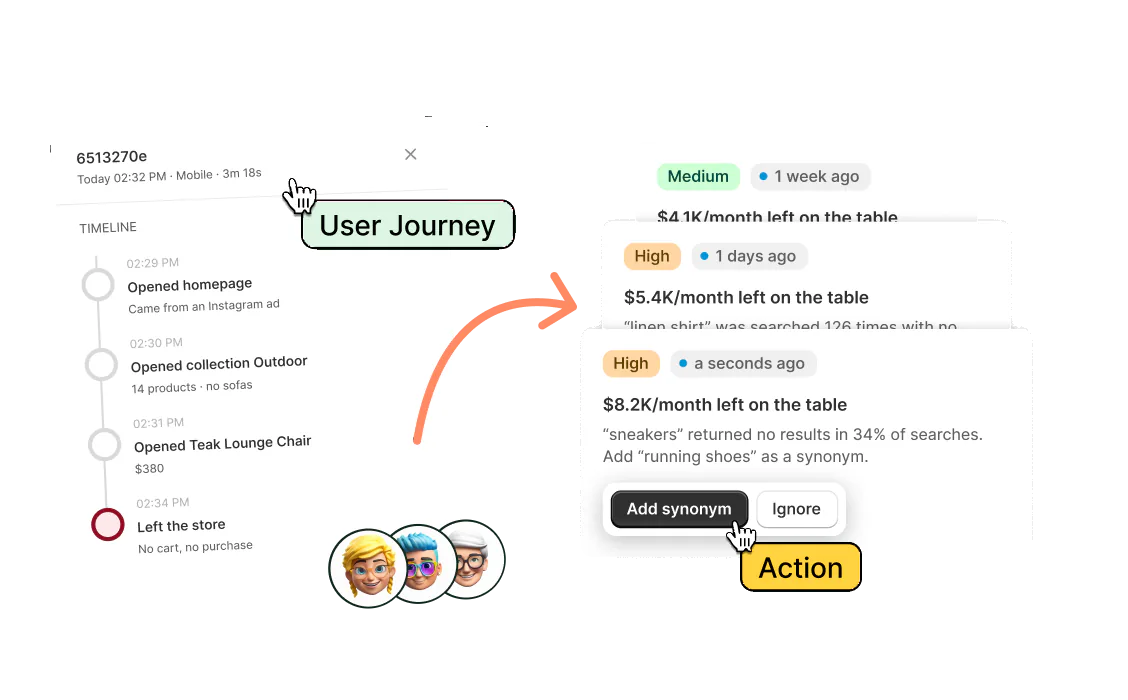
Sledge does not find manufacturers or print labels. Sledge Reviews collects reviews from your shoppers and can show star ratings in search results, collections and product pages, so a new name has proof beside it. On any paid plan, Growth Intelligence sums what its suggested fixes could add into one figure in your store's currency, labeled "Est. potential".