What is gross profit?
Gross profit is net sales minus cost of goods sold, what the items you sold cost you. It is an amount, not a percentage. Sell $16,400 in a month after discounts and returns, on items that cost you $6,900, and your gross profit is $9,500.
How do you calculate gross profit?
Start with gross sales, your prices times the units sold. Take off discounts and returns to reach net sales. Shopify's net sales also leave out the shipping you charge and the tax you collect. Then subtract cost of goods sold: what you paid for those items, or the materials and labor that made them.
| Line | One month |
|---|---|
| Gross sales | $18,400 |
| Minus discounts | $1,150 |
| Minus returns | $850 |
| Net sales | $16,400 |
| Minus cost of goods sold | $6,900 |
| Gross profit | $9,500 |
Which products earn the most gross profit?
Count each product in dollars: the price it sold for minus what one unit cost you, times the units sold. A $150 coat that cost you $60 leaves $90 a sale, and a $12 pack of socks that cost you $6 leaves $6. The coat keeps more of its price, 60% to 50%, a share called gross margin. Sell 15 coats and 300 packs in a month, though, and the socks bring in $1,800 of gross profit to the coats' $1,350.
What does gross profit leave out?
Gross profit has not yet paid for ads, apps, rent or most wages. Where the shipping you pay and your card fees go is your call. Shopify's gross profit guide counts both as cost of goods sold, while the gross profit in Shopify's reports subtracts only the product cost you record. Pick one way and keep it every month. Gross margin vs net margin walks from gross profit to net profit, the amount left after every cost.
Where does Shopify show gross profit?
In Analytics, open Reports, then Finance Summary. Its "Gross profit breakdown" card splits net sales in two: "Net sales with cost recorded" and "Net sales without cost recorded". Shopify's help says only sales with a cost recorded count toward gross profit.
Say $1,400 of that $16,400 month came from items with no cost on file, and they cost you $600. Shopify then counts $15,000 of sales and $6,300 of cost, so its gross profit reads $8,700, not $9,500. Click "Cost per item" in each product's Price section and add what one unit cost you, per size or color. Orders placed before that stay out of gross profit.
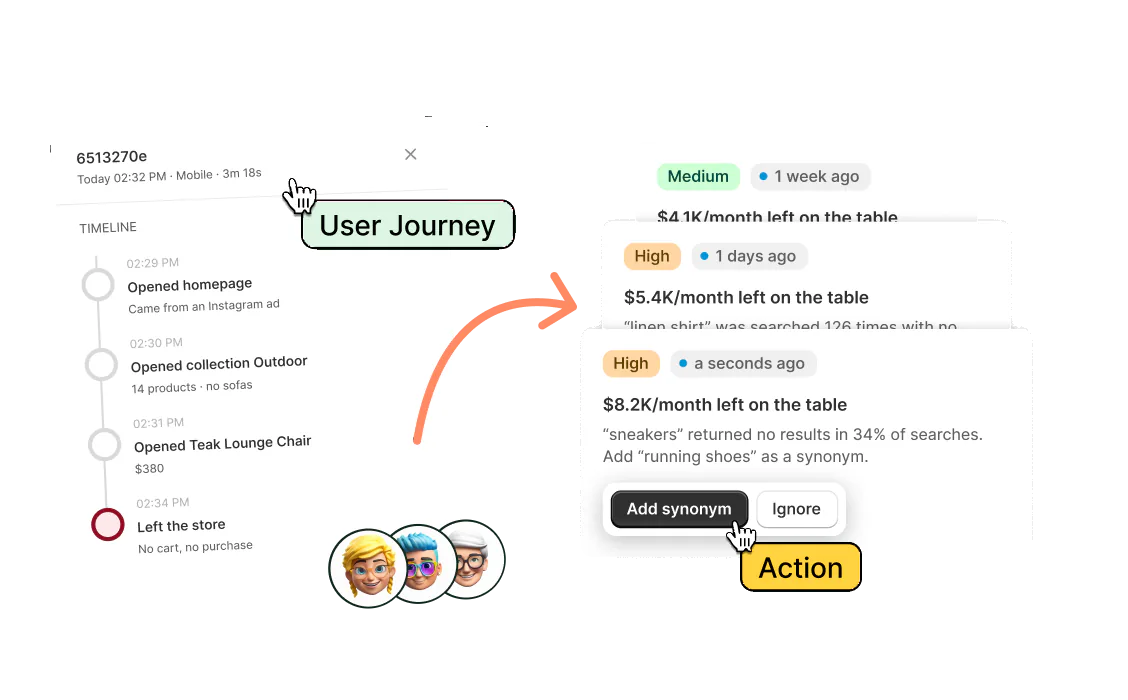
Search, filters and offers, with Sledge
Sledge does not read your product costs, so it shows no gross profit. It runs your storefront's search, filters, bundles and upsells. On any paid plan, Growth Intelligence sums the sales its suggested fixes could add into one figure, labeled "Est. potential". That figure counts sales, not gross profit.