What is brand loyalty?
Brand loyalty is a shopper's steady preference for your brand over the alternatives. A loyal shopper buys again even when another store is cheaper or easier. Repeat orders alone do not prove it, since a shopper can reorder out of habit or for a discount code.
What are the stages of brand loyalty?
Marketers often split brand loyalty into three stages.
| Stage | What the shopper does |
|---|---|
| Recognition | Knows your name and can pick your store out of a crowd |
| Preference | Chooses you when prices and delivery are close |
| Insistence | Looks for you first and skips substitutes, even at a higher price |
Some models add advocacy as a fourth stage, where shoppers recommend you.
What are the types of brand loyalty?
Brand loyalty has a behavior side and an attitude side. Behavioral loyalty is the buying: the shopper orders again. Attitudinal loyalty is the preference: the shopper would pick you even when another store costs less. Loyalty needs both. Marketers call buying without the preference spurious loyalty, and habit, convenience or a lack of other choices can cause it.
Brand loyalty vs customer loyalty
Customer loyalty is repeat buying that price and convenience can drive. Brand loyalty is a commitment built on trust and product quality, which a lower price elsewhere may move less. TechTarget draws the line this way, though sources differ on how far the two overlap.
What are examples of brand loyalty in a Shopify store?
Say two shoppers each show four orders. The first paid full price every time. The second ordered only in the days after each emailed discount code. A count of orders cannot tell them apart, but the first looks more like preference.
Shopify shows who repeats, not why. In Analytics, open Reports and set the Category filter to Customers. The "Returning customers" report lists everyone with two or more orders, with their first and latest order dates, order count and total spent. "One-time customers" lists shoppers with a single order. To spot repeat orders a discount code drove, set a shopper's order dates against the days you sent a code. For rewards that bring back a second order, see loyalty program examples. To check whether newer buyers return as fast as older ones, see churn rate.
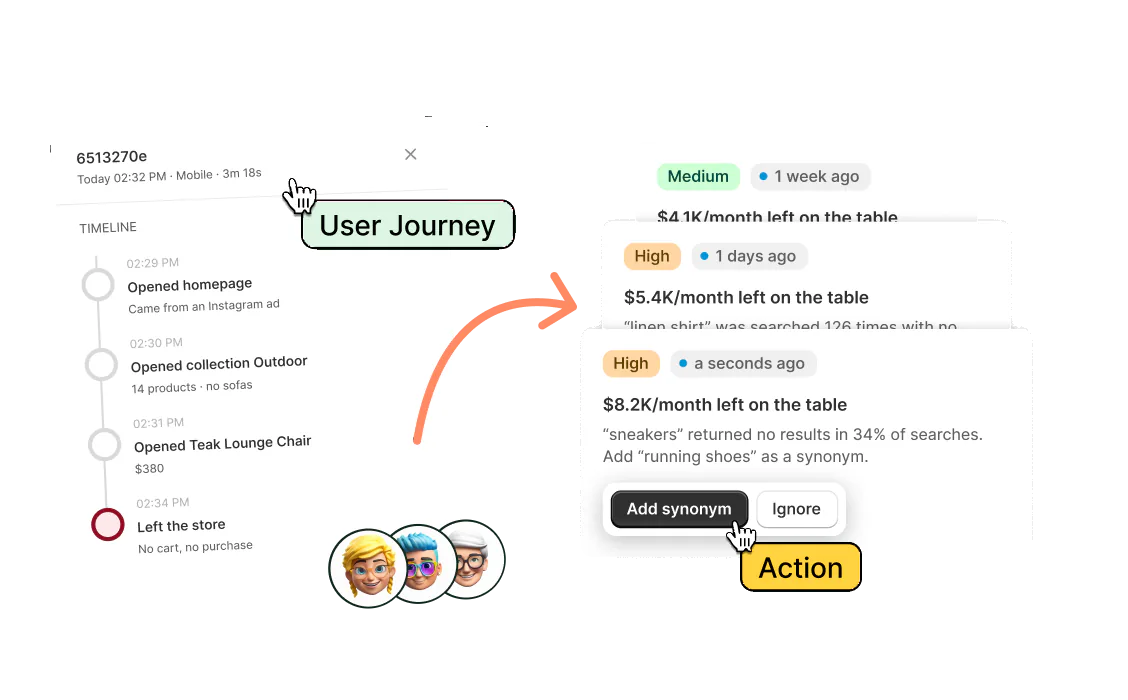
Sledge runs no loyalty program, but it can flag a low repeat rate
Sledge runs no loyalty program, points, tiers or referrals, and does not measure brand loyalty. From the Pro plan up, Growth Intelligence reads your last 90 days of orders, can flag when few customers order again, and suggests fixes such as product recommendations. It totals what those fixes could add in sales as one dollar figure, labeled "Est. potential". It estimates sales, not loyalty.