What is a target market?
A target market is the group of shoppers most likely to buy what you sell, described by who they are, where they live and what they need. A candle shop's might be people buying a gift for a host or a friend, not everyone who likes candles. You aim your products, photos and ads at that group.
Target market definition: four ways to describe one
You can describe a target market with four kinds of detail. Demographic is who they are, such as age or income. Geographic is where they live or where you ship. Psychographic is what they value or enjoy. Behavioral is how they buy, such as how often and in which season. Pick one or two details from each kind. Splitting a market this way is called market segmentation.
Target market examples for a store
| Store | Target market | What it decides |
|---|---|---|
| Candle shop | People buying a gift for a host or friend | Gift wrap, a note and last order dates before holidays |
| Trail-running socks | Runners training for a long race | Which sizes you stock deepest and the words in product titles |
| Baby-gift box | Friends and relatives of new parents | Whose feeds your ads run in |
"Anyone who likes socks" decides nothing. A good target market settles what you stock, how you write and where you advertise.
Target market vs target audience
Your target market is the whole group you aim at. A target audience is the part of it that one ad, email or page speaks to. The candle shop has one market and two audiences: gift buyers in November, and returning gift buyers all year. Some guides draw the line the other way round, so check which meaning a guide uses.
Where do you see who buys from you in Shopify?
Your orders show who already buys, and Shopify has two places to look: Segments for what buyers purchase and spend, Reports for where new buyers ship. In your Shopify admin, go to Customers, then Segments, and click Create segment. In its editor, the "Open templates" icon lists ready-made groups, including a category called "Target specific location". A segment's filters include country or region, amount spent, number of orders and products purchased. Under Analytics, then Reports, filter the Category to Customers and open "Customers by location" to see where new buyers ship. These show where buyers are and what they bought, not their age or interests. If your best buyers differ from your picture, aim your next ad or email at them. RFM analysis and customer lifetime value rank them.
What your shoppers act on, with Sledge
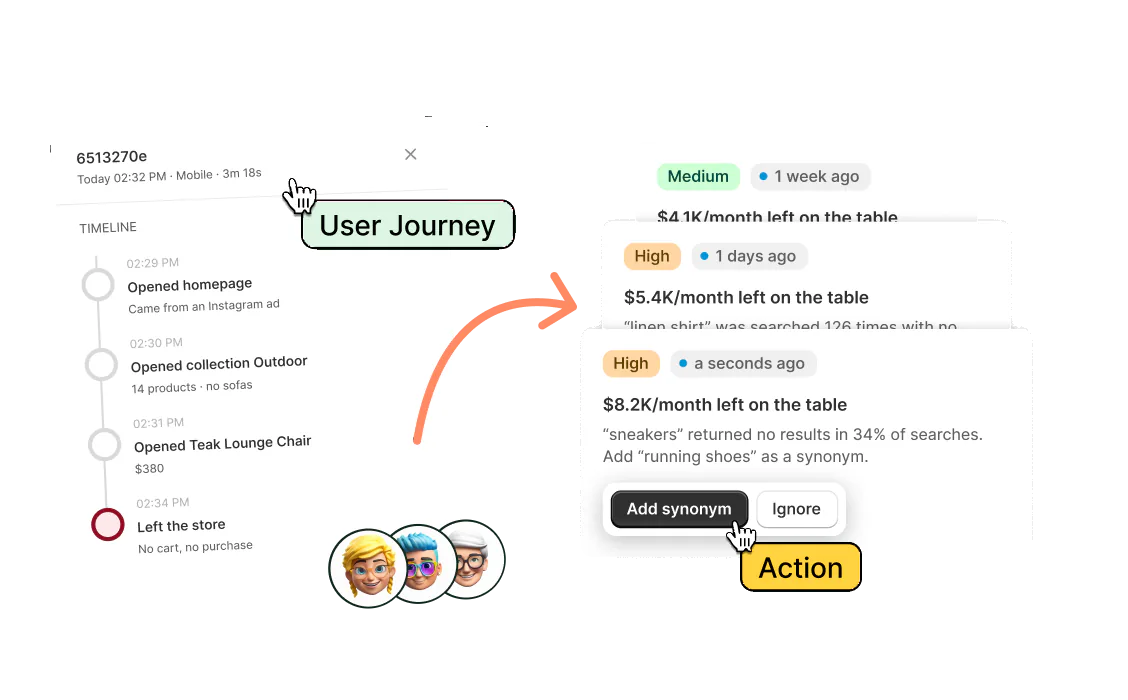
Sledge does not define your target market or sort shoppers into groups. In Sledge Analytics, the Search page under Tools shows which products shoppers click and add to cart from Sledge search results, and which searches found nothing. Growth Intelligence turns on when you pick a paid plan. It reads your orders, suggests fixes and adds up what they could bring in sales as one dollar figure labeled "Est. potential".