What is a SKU (stock keeping unit)?
A SKU, short for stock keeping unit, is a code you make up for each item you stock, so you can count it, find it and see what sells. Each size in each color gets its own. A tee in 4 sizes and 2 colors needs 8 SKUs, such as TEE-BLK-M for the black medium.
What does SKU mean in business and retail?
In retail, SKU names both the code and the item it stands for: one product in one size and color. Staff read it on a price tag, a label or a packing slip to grab the right item. Shopify's help says sales reports work best when every item has its own SKU, so you can see the medium sell out while the small sits. Say it "skew" or spell it out.
SKU vs UPC: what is the difference?
| Compared | SKU | UPC |
|---|---|---|
| Who makes it | You | The brand that owns the product, through GS1 |
| Looks like | Letters and numbers, such as TEE-BLK-M | 12 digits under a barcode |
| Same in every store? | No, each store sets its own | Yes |
Two stores selling the same mug share its UPC code and keep their own SKUs. You can use both on one product.
How should a SKU be formatted?
No standard sets the format, but Shopify's help suggests a few rules. Use letters and numbers, with dashes or underscores between the parts and no spaces or symbols. Keep it to about 16 characters or fewer. Give each abbreviation one meaning, so BLK always means black. Avoid O and I, which read like 0 and 1. Shopify's SKU guide adds two more: put the product first, then color, then size, and start with a letter, since many spreadsheets drop a leading zero.
How do you add a SKU in Shopify?
Open Products, then the product. Under Variants, click one size and color. In its Inventory section, click "SKU", type the code and save. A product with no sizes or colors has the same button on its own page, beside "Barcodes", where a UPC goes. SKUs are optional, but Shopify wants each one unique and warns you about a duplicate. Under Products then Inventory, each item shows its SKU, or "No SKU" where one is missing. A cycle count in Shopify can add its products from a list of SKUs.
SKU search in your store, with Sledge
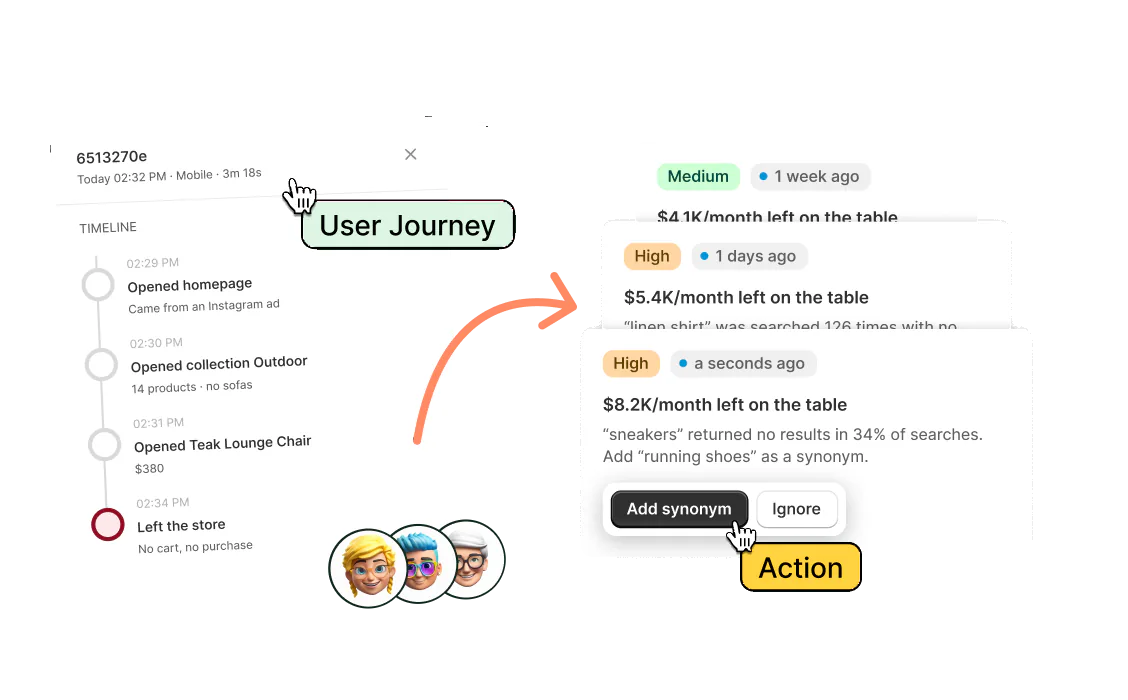
Sledge does not create SKUs or count your stock. Sledge search finds a product when a shopper types the full SKU of any of its sizes or colors. Part of a SKU does not match. On the "Field Priority" page, which ranks the product details that search reads, check that SKU is switched on. Growth Intelligence turns on when you pick a paid plan. It reads your store's searches and gives one dollar total, labeled "Est. potential", for the sales its suggested fixes could add.