
What Shopify vehicle fitment needs that a filter cannot give
Vehicle fitment answers one question: does this part fit my car. No filter can answer it, because fitment is not something a part is, it is a list of what the part works with. A parts catalog needs both, and Shopify gives your whole store 25 filters to spend on the rest.
What's in this guide

What are shoppers actually asking a parts store?
One of two things, and they need opposite answers.
The first shopper has a number. It came off the old part, or out of a forum post, or off an invoice. They want one page and they want it in one move. Nothing about that is a browsing problem, and a filter rail does not help them at all.
The second shopper has a car. They know the year, they know the model, and they have no idea what the part is called. They want to be told what fits before they are shown anything. Everything they do afterwards is narrowing.
Build for the second shopper only, and the first one leaves without ever showing up in a report. Both matter, and they are answered by different tools.
Why can a filter not answer "will this fit my car"?
Because fitment is not a specification. A brake pad does not have a make and model the way it has a thread size. It has a list of the vehicles it fits, and that list is long, irregular, and true only until a manufacturer changes something mid-year.
A filter narrows by what a product is. Fitment answers what a product works with. You can write every compatible vehicle onto every part, and stores do. What you have then is a second catalog to keep current, for every part, forever.
That maintenance is the real cost of fitment, and it is the part nobody quotes you. The tool is the cheap half.
Can Sledge tell a shopper which parts fit their car?
Sledge has no vehicle database. There are no year, make and model dropdowns, no saved garage that remembers a shopper's car between visits, and no registration or chassis lookup. Sledge searches and filters what your catalog already holds, and if the fitment facts are not in it, Sledge cannot invent them.
A dedicated fitment app comes with that database already built, and charges a monthly fee for it. If your shoppers arrive knowing their car and nothing else, that fee buys the one thing your catalog cannot answer on its own.
Price it in three parts before you choose. The subscription. The hours to tell it which of your parts fit which vehicles, which runs into weeks once you are past a few thousand parts. And the standing job of keeping it right as you add parts, which never ends and is where most fitment projects quietly fail.
What does an honest parts stack look like?
Two tools, stacked. The fitment app sits at the top of the page and answers the car question. The filter rail sits down the side and narrows whatever that returned, by brand, by category, by specification, by what is in stock.
They are not competitors, and running both is not a redundant subscription. It is the normal shape for a parts store selling to people who arrive with a car and to people who arrive with a number.
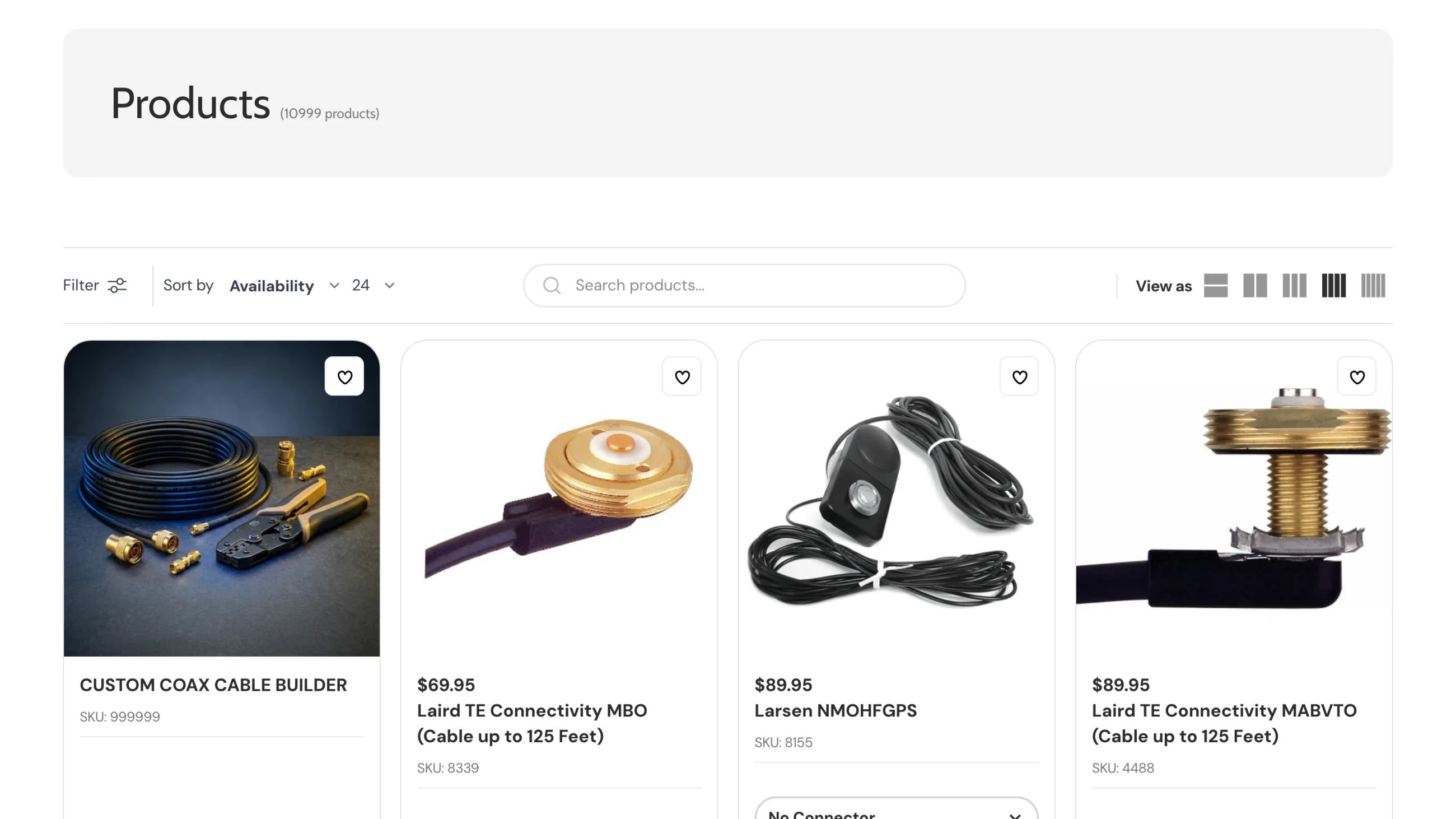
What should the filter rail carry instead?
Four things, roughly in this order.
A category tree, not a category list. Suspension opens into Shocks, Shocks opens into Rear, and every branch carries its own count. A shopper reads one short list at a time instead of one flat list of everything you sell.
Brand. In parts this narrows harder than almost anything else, because shoppers arrive loyal or arrive avoiding.
The two or three specifications a category is actually compared on. Not all of them. A thread size matters on fasteners and is noise on floor mats, which is an argument for different filters per collection long before it is an argument about ceilings.
Availability. A shopper mid-repair cares more about what ships today than about anything else on the rail.
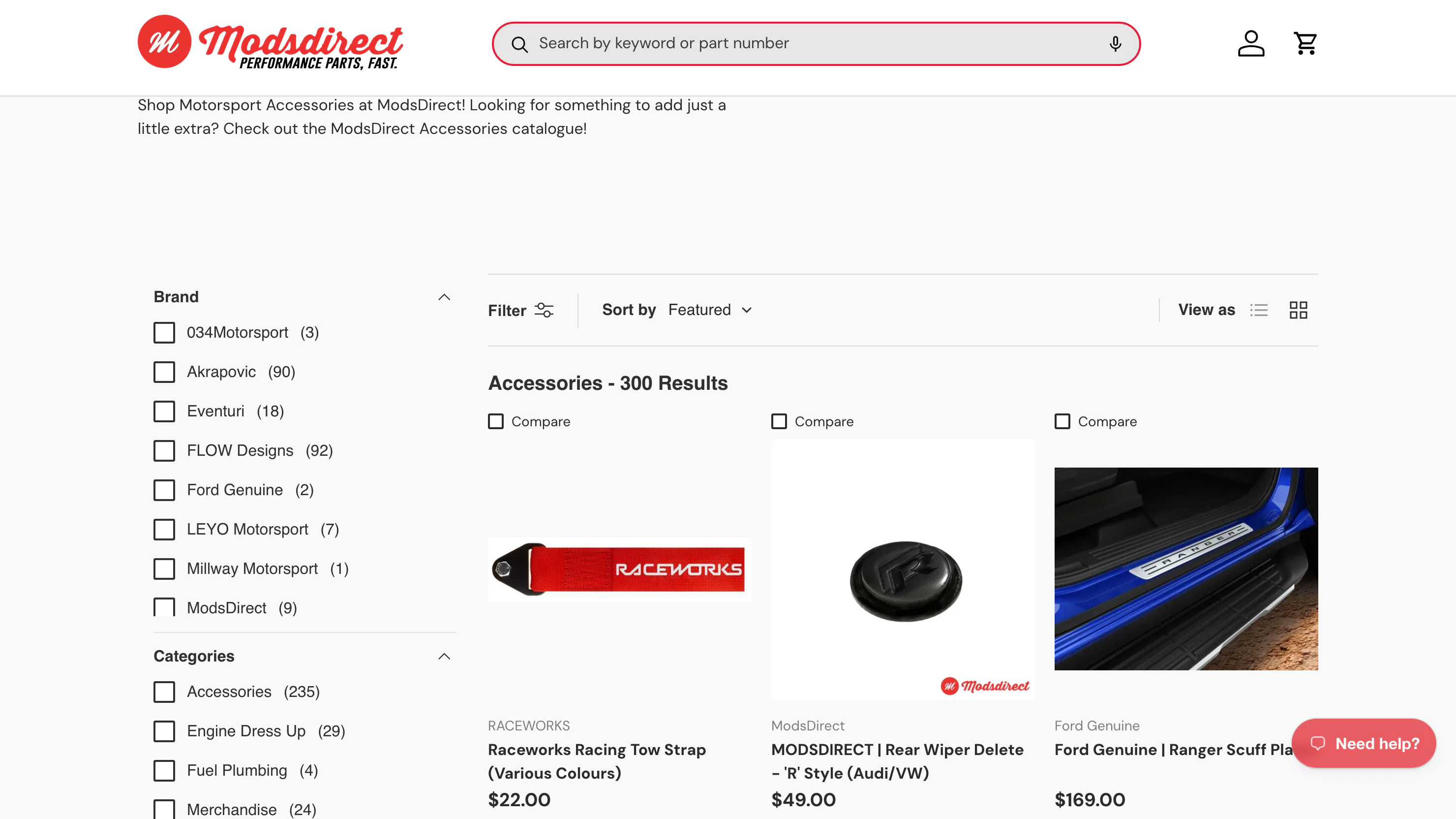
Shopify's own filters cover the last three well enough, until the arithmetic catches up: 25 filters for the whole store, and no filters at all on a collection past 5,000 products. That ceiling has its own page. Sledge filters nest, and they build a facet from a detail you fill in yourself without spending one of the 25.
Why do specification filters go wrong?
Almost always for the same reason, and it has nothing to do with the tool. The values are inconsistent.
One supplier sends 10mm, the next sends 10 mm, the third sends M10. Those are three entries in the filter and a shopper picks one. Materials, finishes and ratings drift the same way, slowly enough that nobody notices until the rail is twice as long as it should be.
Grouping fixes some of it: values that mean the same thing can be collapsed into a single entry a shopper sees. What it will not fix is a field somebody left blank, because a part with no value for a specification simply drops out of that filter. Half your catalog can vanish from a perfectly working filter and the page will not tell you.
So the first hour of any filter project on a parts catalog belongs to the values, not the settings. It is dull, and it decides everything that comes after.
Questions, answered
Does Sledge do year, make and model fitment search?
No. Sledge has no vehicle database, no year, make and model dropdowns, no saved garage and no registration lookup. It filters and searches what your catalog already holds. Vehicle fitment is a separate job, usually handled by a dedicated fitment app that sits alongside search and filtering rather than replacing them.
How many filters can a Shopify parts store have?
Twenty five for the whole store, standard and custom counted together. A parts catalog spends that quickly, because six product categories that each want four specifications is 24 filters before brand, price or availability. It is a store ceiling, not a per-collection one, so growth is what runs you out.
Can shoppers filter by part number on Shopify?
Filtering is the wrong tool for a part number. A shopper who has the number wants one page, not a narrowed list, so that belongs to search rather than to the filter rail. What filtering is for is the shopper who has a category and a specification and needs to see the shortlist.
Why do my filters vanish on my largest parts collection?
It has passed 5,000 products, which is the size at which Shopify stops rendering a filter panel on a collection page. On a catalog of tens of thousands of parts that limit is reached by the branches shoppers use most, so the collections that most need narrowing are the ones that lose it first.
Should specifications be product options or their own fields?
Their own fields, unless a shopper genuinely chooses between them on the product page. Thread size is something you filter a list by. Cable length is something you pick when buying. Getting that split right is what stops your option list from becoming a filing system nobody can shop.
The search that came back empty was a part you could have sold.
Growth Intelligence reads the searches your store answered with nothing, then names the parts shoppers keep asking for and puts a dollar estimate on each one. It runs weekly on Pro at $29.99 a month, and every day from Accelerate.
14-day free trial · No code · Works with any theme · Uninstalls clean