What is cost plus pricing?
Cost plus pricing, also written cost-plus pricing, sets a price by adding a markup to what a product costs you. A candle that costs $20, with a 40% markup, sells for $28. The method is simple, and it ignores what shoppers will pay and what other stores charge.
How do you calculate cost plus pricing?
Price = cost × (1 + markup). Cost is what one unit costs you: the product, plus inbound shipping and packaging if you count them. For the $20 candle, $20 × 1.40 = $28, so $8 of every sale sits above cost. Shopify's help center gives the same formula.
Markup vs margin
Markup divides the $8 above cost by your $20 cost. Margin divides it by the $28 price. So the candle has a 40% markup and a margin of about 29%. To earn a 40% margin, price it at $33.33, not $28.
Shopify works out margin for you. In a product's Price section, open "Cost per item" (the box for what you paid, without shipping or taxes), enter $20 against a $28 price, and "Margin" reads about 29%. If your prices include tax, Shopify hides Margin on products you charge tax on. See gross margin vs net margin for margin itself.
Is cost plus pricing a good strategy?
Treat it as a floor. A long catalog gets priced in minutes, and every unit earns the same markup, which suits plain items like a basic tee, where a small price change rarely changes who buys. Anything trending or limited-edition breaks it, because shoppers pay what a product is worth to them. The method goes stale: when a supplier raises a price, yours stays put until you update the cost. When a product is worth more than cost plus a markup, start from that worth, as prestige pricing does.
What does a discount do to your markup?
Every discount comes out of the markup. Take 20% off the $28 candle and it sells for $22.40, which leaves $2.40 above cost: a 12% markup instead of 40%. A discount deeper than the margin, about 29% here, sells below cost. Check a volume discount or a bundle discount against your margin first.
Once the price is set, with Sledge
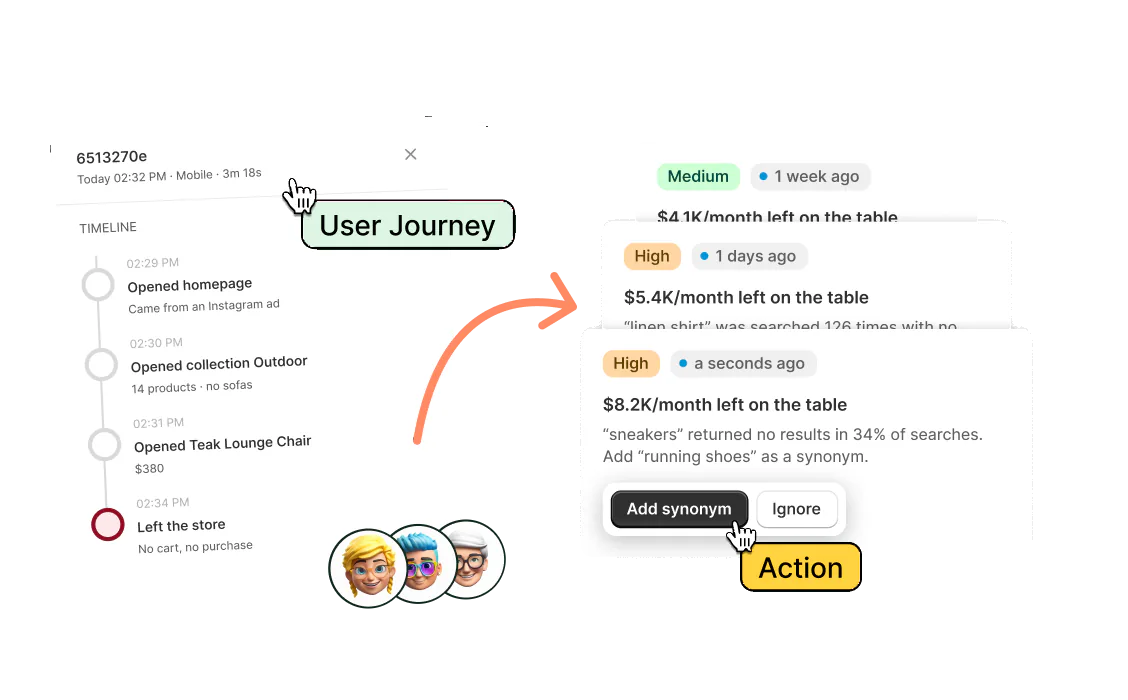
Sledge does not read your costs or set prices from them. A bundle or volume discount you build with Sledge bundles comes out of the markup you chose. On any paid plan, Growth Intelligence can flag a pair of products your customers already buy together and suggest a bundle. It sums what its fixes could add into one dollar total, labeled "Est. potential", and gives each fix you set up a before-and-after check on sales through Sledge.